The Factory Floor
What we're building, testing and learning.
Notes from active projects across web, AI, search, product and immersive work.
-

Claude Design Launch: What It Means for AI Design Tools
Anthropic launched Claude Design on Friday and Figma's stock fell 7%. Here's what the new AI design tools mean for Figma, Adobe, and creative work
-
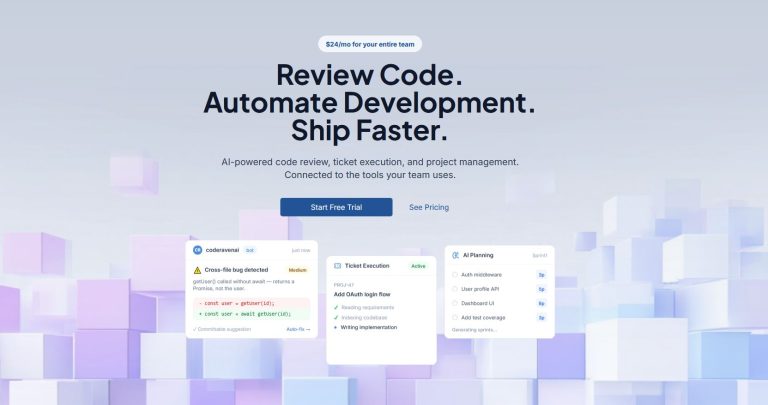
Why We Built an AI Code Review Too and What It Taught Us About Shipping Software
Here’s something most agencies won’t tell you: we build our own products. Not as passion projects or things we tinker with on slow Fridays.…
-

The Equalizer: How AI Video Is About to Democratize Entertainment
AI video generation tools like Seedance and Veo are putting studio-quality production in anyone's hands. What that means for creators and Hollywood.
-

Prefabs in Unity: Unity Basics Part 7
Prefabs are reusable GameObject templates that work like smart stencils, create once, use everywhere. When you modify a Prefab, all instances automatically update. Perfect for coins, enemies, trees, or any repeated objects. Prefab Variants allow customization while maintaining base connections. This system enables consistency, efficiency, and easy maintenance across large projects with hundreds of identical objects.
-

Unity Scripting: Unity Basics Part 6
Unity scripting uses C# to give GameObjects intelligence and interactivity. Scripts are Components that contain step-by-step instructions for object behavior, like making cubes move, respond to clicks, or change colors. You don't need extensive programming knowledge to start; simple scripts using basic functions like Start() and Update() can create compelling interactive experiences through small, manageable steps.
-

Implementing an AI Workflow Stack: Roadmap, Governance, and How to Measure ROI
Most AI initiatives fail not because the tools don't work, but because businesses skip the system design, no documented workflows, no shared prompt libraries, no governance, no feedback loops. SLIDEFACTORY's three-phase implementation model progresses from individual prompt templates (weeks 1-4), to standardized team workflows with limited automation (months 2-3), to fully triggered pipelines connected to live business data (months 3-6), with human approval checkpoints at each stage. The post closes with a frank breakdown of costs ($150-500/month at steady state), ROI benchmarks (break-even at 5-10 hours saved per week), and the six recurring mistakes that kill most AI initiatives before they deliver value.
-

Physics in Unity: Unity Basics Part 5
Unity's physics system transforms static 3D art into interactive experiences through three key components: Rigidbodies (give objects mass and gravity response), Colliders (define physical boundaries), and Physics Materials (control bounce and friction). Together, they create realistic movement and interaction, from bouncing balls to complex vehicle simulations, bridging the gap between visual appeal and engaging gameplay.
-

AI SEO Workflows: How to Scale Organic Growth Without a Big Content Team
also for this one please5:17 PMSmall SEO teams can compete with larger content operations by using AI for the research and structural work: keyword clustering, intent mapping, internal linking, schema markup, and content refresh, rather than treating it purely as a writing tool. The highest-leverage workflows are content refresh optimization (improving existing assets that already have authority) and internal linking (a widely skipped tactic that consistently moves rankings). The post also flags an emerging shift: as AI-powered search grows, businesses that structure their content with clear claims, named frameworks, and strong entity signals will have an advantage beyond traditional Google rankings.
-

AI for Development Teams: Reducing Friction Without Cutting Corners
Small engineering teams drowning in low-value work, scaffolding, documentation, debugging, legacy refactoring, can reclaim significant capacity by building AI workflows around these tasks without sacrificing code quality. SLIDEFACTORY's approach treats AI like a fast junior developer: it handles the repetitive first drafts while engineers focus their time on architecture, system design, and review. The core principle is that AI compresses the gap between "I need this" and "here's a draft to review," not between "I need this" and "it's already shipped."
-

Materials & Lighting: Unity Basics Part 4
Materials are like digital "skins" that define how surfaces look: controlling color, shininess, transparency, and glow. Textures add detailed patterns like wood grain. Lighting sets mood and atmosphere through different light types and three-point lighting setups. Together, materials and lighting transform bland 3D cubes into convincing wood, glass, metal, or glowing energy surfaces.
-

Unity GameObjects: Unity Basics Part 3
GameObjects are Unity's fundamental building blocks, like Lego bricks that can become anything. Each GameObject is an empty container that gains functionality through Components (Transform, Mesh Renderer, Colliders, etc.). By mixing different Components, simple GameObjects become complex interactive elements. A cube becomes a bouncing ball, glowing light, or spaceship part through strategic Component combinations.
-

AI for Marketing Automation: How Small Teams Multiply Their Output
SLIDEFACTORY's marketing AI workflows address the execution bottleneck that plagues small teams managing multiple channels with limited resources. Their framework automates repetitive production tasks: landing page drafts, ad creative variations, email sequences, and content repurposing, while keeping strategic decisions and quality control with the marketing team. The highest-ROI workflow is content repurposing, which transforms one blog post into 5-6 distribution-ready pieces across channels, and the critical success factor is closing the feedback loop by feeding performance data back into future AI prompts.
What's next should be worth building.
New products. Better systems. More compelling experiences. Whatever the opportunity, we bring the thinking, creativity, and technical expertise to make it real.
Start a Conversation 4520 SE Belmont St, Suite 300Portland, Oregon