The Cognitive Agency.
Artificial intelligence is changing how agencies plan, create, and operate. The Cognitive Agency explores these changes and the decisions involved in bringing AI into everyday agency work.
The Cognitive AgencyArtificial Intelligence
Helping leadership decide where AI investment belongs.
AI investment needs an order of operations. We help leadership decide which workflows deserve attention, where data and permissions could block progress, and which tools or systems to build, buy or leave alone.
Price note: AI Opportunity Assessment, starting at $1,500.

AI strategy consulting services should answer the questions leadership will be asked next: which workflow changes first, which software can be reused and what the organization would be committing to if it authorizes a build.
Look for recurring tasks that consume people’s attention: the weekly report assembled from different systems, the proposal repeatedly started from scratch, or the same information routed between teams.
Follow the steps people take now, including approvals and exceptions. The useful improvements may involve changing a handoff before any model is involved.
Some needs can be handled with an existing subscription. Others require a custom integration or application. The strategy makes that distinction and identifies work that should remain unchanged for now.
Identify where records live, who may access them and what an AI-enabled workflow would need to retrieve. Data-handling rules and permissions are agreed before development begins.
A working AI process needs people who know when to use it, how to check results and who maintains it. The strategy includes adoption and training requirements where they matter.
Define the dependencies and likely effort for each recommended step so leadership can decide which work to authorize. A scoped build estimate follows when the technical requirements are clear.
AI strategy consulting identifies where artificial intelligence can support a business and how to introduce it responsibly. The work reviews current processes, data, software and team needs, then ranks opportunities and defines an AI roadmap. Our recommendations come from a team that also designs and engineers AI applications, integrations and agents, so the roadmap accounts for how the work would actually be built.
The people planning the work understand the integrations and production conditions behind it.
We’ve built AI into client products and our own systems.
Recommendations can include a simpler workflow, an existing tool or waiting until a dependency is resolved.
The same review checkpoints and operational measurements inform our recommendations.
CodeRaven is our own AI code-review agent, used in the engineering process. From February 27 through July 24, 2026, it reviewed 1,164 pull requests. One in four was asked to change before merging, and 237 review runs flagged a high-severity issue. Total model spend was $161.20, with a developer providing final approval for every merge.
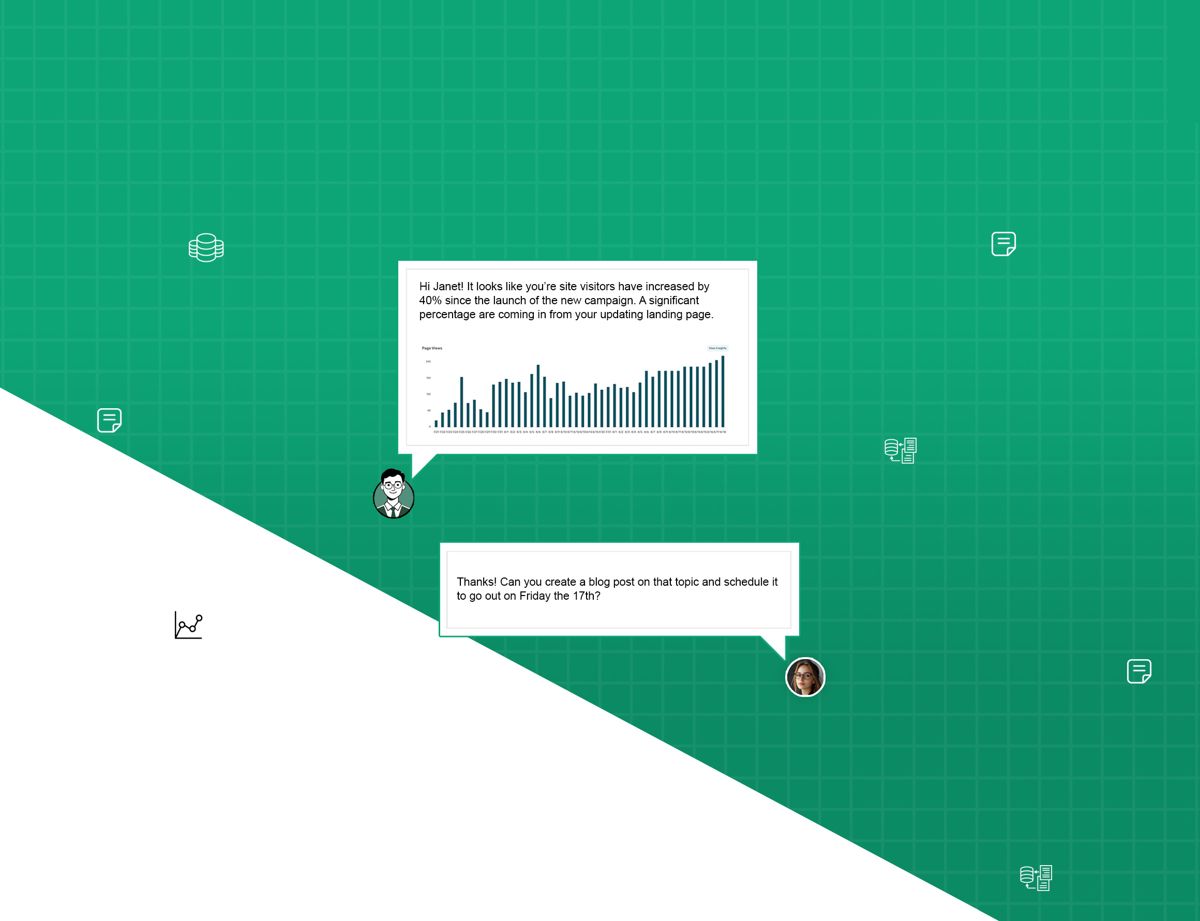
Insyght is a platform we designed and built for small businesses. It reads Google Analytics and Google Ads data, creates plain-language insights, and connects content publishing and emailed reporting to the same workflow. It shows how a useful product depends on the information moving between services.
View project
Artificial intelligence is changing how agencies plan, create, and operate. The Cognitive Agency explores these changes and the decisions involved in bringing AI into everyday agency work.
The Cognitive AgencyWe begin with the decision leadership needs to make. That determines which teams, workflows and systems the assessment should examine.
We speak with people who carry out and manage the work. We examine routine steps, exceptions and where information passes between teams or tools.
We identify what software is in place, where information lives and what constraints an implementation would encounter. Permissions and data requirements are part of the discussion.
We rank the opportunities and recommend an approach for each. This can mean an off-the-shelf tool, an integration, an agent, a process change or postponing work.
The AI roadmap puts the proposed work in sequence, including dependencies that could affect timing or scope.
The AI implementation consulting stage clarifies which opportunities are ready to scope, which need investigation and which can use existing tools.
A clear set of workflows and the reason each deserves consideration.
A recommended route for each opportunity, grounded in the systems and processes reviewed.
The permissions and data-handling requirements to resolve before connecting systems or developing software.
The priorities, dependencies and next steps that would turn the recommendation into work.
The assessment gives you a foundation for making decisions internally or with SLIDEFACTORY. The roadmap can be acted on by the people you choose.
Starting at $1,500
Initial intake and discovery, stakeholder and workflow interviews, a review of existing systems and processes, prioritized recommendations, and an implementation roadmap. After the assessment, any implementation is scoped and quoted separately. Options include a Focused AI Implementation for one defined workflow, Custom AI Systems with multiple integrations and agents, or AI Team Integration & Training to bring Claude or ChatGPT into daily work.
An AI strategy consultant reviews how a business operates and identifies where AI could support its goals. Our work covers stakeholder and workflow interviews, an examination of existing systems, ranked recommendations and an implementation roadmap. The plan can recommend software, integration, training or a simpler process.
The AI Opportunity Assessment starts at $1,500, with the final price varying by company. It includes discovery, interviews, systems review, prioritized recommendations and a roadmap. Any follow-on engineering or team rollout is scoped and quoted separately.
The assessment timeline depends on the number of workflows, people and systems to review. We agree the schedule as part of the initial scope.
No. The roadmap is intended to help your business decide what to pursue, whether you use your own team or work with SLIDEFACTORY. We can carry out the integration or application work when that is the chosen route.
We say so. A current subscription or a change to the handoff between people may solve the problem. Some opportunities also need better data or a clearer process before any implementation makes sense.
The strategy engagement produces the decisions and roadmap for AI adoption and implementation. The AI Opportunity Assessment is our defined starting product for reviewing workflows, systems and business readiness before those decisions are made.
We work with Claude, OpenAI and Gemini models and choose them according to the workload. We’ve moved production work between providers as requirements changed. The recommendations take into account existing subscriptions and the systems they need to connect.
We agree data access, permissions and handling requirements before development. Integrations a client depends on run in accounts that client owns. During a pilot we may use our Claude backend, then move the integration to the client’s accounts at handover.
Yes. We can configure business accounts, shared instructions and workflows, and provide role-specific training. We can also build the recommended integrations. See AI integration services for how the setup and technical work come together.
We work nationally with organizations that need a practical AI plan, including businesses without their own AI engineering staff. We start from the workflows and systems involved and scope the assessment around the decision you need to make.
From practical workflow improvements to ambitious AI-powered products, we bring strategy, creativity, and engineering together to build technology that serves a purpose.
Talk About Your AI Project