AI Integration Services That Put AI to Work in the Systems You Already Use
We connect Claude or ChatGPT to your CRM, job records and documents, then train each team on its own work. Most engagements start with a $1,500 half-day session.
Companies we've collaborated with








What do you want AI to handle?
Our AI integration services usually start with one of these. Good candidates for AI workflow automation repeat every week and touch two or three systems. The half-day session picks the one worth doing first.
AI for customer service
Replies drafted from your help desk history, common questions answered on your website, and anything sensitive handed to a person.
AI document processing and knowledge base
Policies, specs, past proposals and project photos searchable in plain language, with the source attached to every answer.
AI scheduling and job coordination
Job updates, crew notes and schedule changes summarized and posted where your team already works.
AI proposals and estimates
A first-draft estimate or proposal built from the job record and your price sheet, reviewed by your estimator before it goes out.
AI reports and paperwork
Weekly reports, client reports and program paperwork drafted from your systems and filed back into them.
AI for sales teams
Follow-ups and call notes drafted from the CRM record, so nothing waits on someone’s inbox.
AI integrations in production
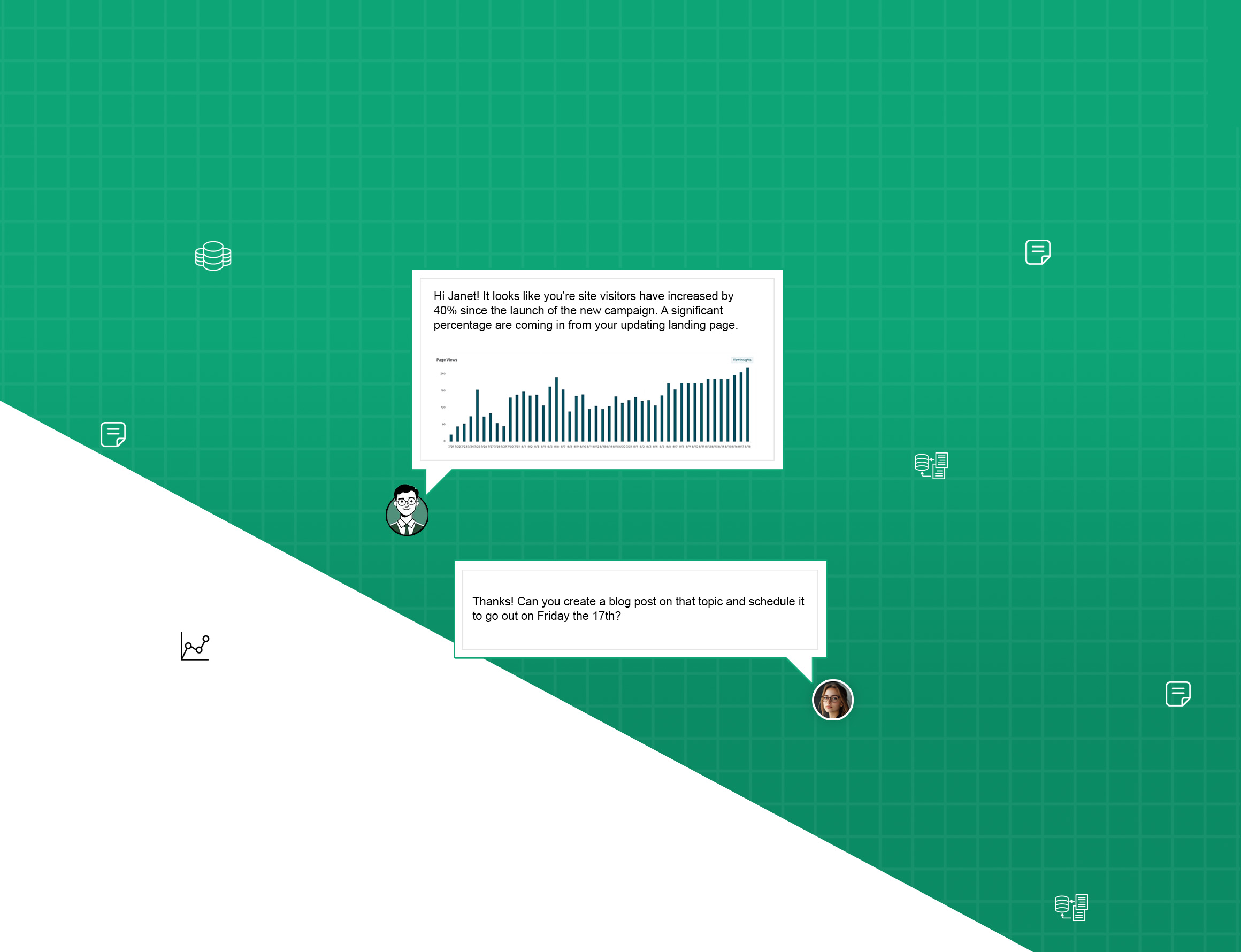
- Insyght Studio. An AI platform we built for small businesses. It reads Google Analytics and Google Ads data, drafts content, publishes to WordPress and LinkedIn, and sends scheduled reports by email. Read the case study.
- An education platform. A custom CMS with admin, teacher and student views, connected to Claude, ElevenLabs and BrandFolder.
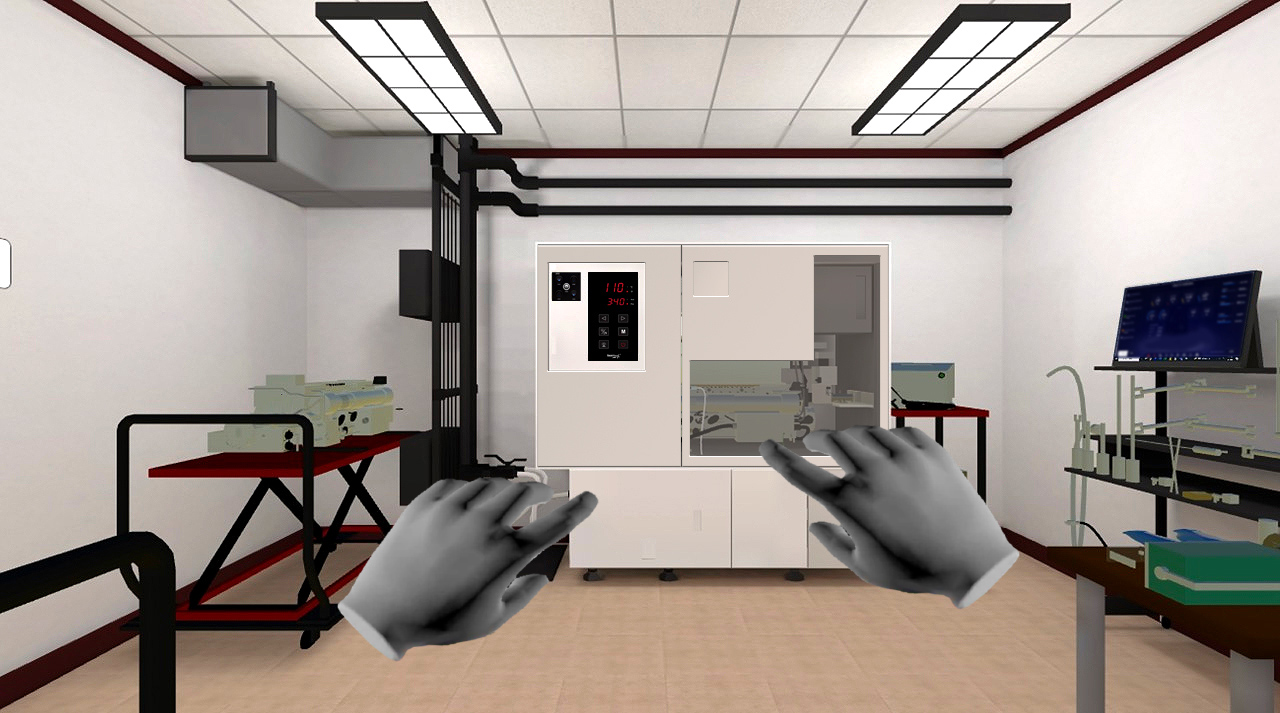
- Gigaphoton VR training. AI-generated narration keeps every module of the maintenance training in one consistent voice. Read the case study.
- CodeRaven. Our own AI code-review agent has reviewed every pull request our team ships since February 2026. See the data.
What it costs to run AI in production
An example from our own team: CodeRaven, the AI code-review agent we built, reviews every pull request we ship.
Pull requests reviewed in its first 148 days
Total AI model cost for all of those reviews
Average model cost per review
Where AI rollouts stall
AI rollouts tend to stall in one of four places.
Licences, no training
Seats were bought and a few people use them well. Nobody set up the workspace or trained each team.
Output retyped by hand
The AI drafts in a chat window, and someone copies the result into the CRM or job record.
Personal accounts
Staff paste company data into personal accounts, outside any admin control.
A pilot that never ships
A test worked once, and nobody owned turning it into the way the team works.
What we add to the AI licences you already pay for
Many companies already pay for Claude or ChatGPT, and a few people use it well. We start from where your team’s hours go, connect AI to the systems that work lives in, and train the people who will use it.
Workflow first
We pick the work before the tool, in a half-day session with the people who do it.
Connected to your systems
Output lands in the CRM, job record or channel your team already uses.
Trained by role
Each team learns on its own documents. Sessions are recorded, with a playbook per role.
Fixed price to start
A fixed-price half-day session, and the build scoped in writing before work begins.
Claude and ChatGPT for business: set up, connected and trained by role
A lot of AI integration starts with an assistant the company already pays for.
- Claude for business or ChatGPT for business plans in your company’s name, with admin controls and shared projects loaded with the context each team needs.
- Connections to your systems. Where a ready-made connector exists, we configure it. Where one doesn’t, we build it. We have built MCP integrations for several products.
- AI training for employees, by role, built on your own documents and workflows.
- Recorded sessions and a short written playbook for each role, so the next hire can start from them.

Your data stays under your control
- We build on the business and API tiers of Claude and other model providers, which by default don’t use your data to train their models.
- Integrations run in accounts you own. During a pilot we can run them on our own Claude backend, then move them to your accounts at handover.
- We ask for the minimum access each integration needs, and remove our access when the engagement ends.
- We work under your NDA on request.
You keep the accounts, prompts, configurations, code and documentation we create.
Our Process
Every AI integration follows the same six steps, starting with a half-day session that maps where your team’s hours go. We have built with AI since 2022, have worked with over 60 clients since 2018, and work from our studio on SE Belmont in Portland.

Where to start
The session and the assessment have published prices. Builds are quoted in writing from your roadmap, because one connected workflow and a company-wide rollout are different jobs.
AI Opportunity Session
A half-day working session to find the first workflow worth integrating.
- Two or three candidates from your own workflows
- A build or don’t-build call on each, with a cost range
- A written roadmap in about a week
- Fee credited toward the build if you continue
AI Readiness Assessment
Two to three weeks. Sometimes the answer is not yet.
- Your AI opportunities ranked by return against effort
- A defined deliverable and a decision point
- Pilots scoped only for what is worth building
- Fixed scope, fixed price
Integration build
Scoped in writing from your roadmap.
- Connected to the systems you already use
- Tested on real cases from your business
- Training by role, recorded
- Accounts, prompts and code you keep
What Our Clients Say

“The Slide Factory is one of those companies you don't often have the privilege of working with. It's not just that they do high-quality work, listen to the client, meet your deadlines, and bring insights that may not have been on your radar.”
“Wow, I loved the finished product. It just worked but also I was able to go through the different iterations so easily because the guys at the Slidefactory were so professional in their process.”
“I had a fantastic experience working with Mark at The Slide Factory. He was incredibly helpful throughout the entire process, asking thoughtful questions to ensure every detail was just right.”
Frequently Asked Questions
What is AI integration?
AI integration connects a model such as Claude or ChatGPT to the systems a business already runs, such as the CRM, job records, documents and Microsoft Teams or Slack. It reads what it needs, drafts the next step and puts the result where the team will see it, with a person approving whatever needs approval.
Where do you start with AI integration?
We start by mapping your workflows. In a half-day AI Opportunity Session we walk through how the work moves today, then pick one or two workflows to integrate first. Good first candidates repeat every week, already have a clear owner and touch only two or three systems. Starting with one or two lets your team see results before the next step is scoped.
How do you price AI integration services?
The AI Opportunity Session is a fixed $1,500 for a half day, with a written roadmap about a week later. Everything after that is scoped: once you choose a workflow, we agree the scope and price in writing before any build starts. If you go ahead, the session fee is credited toward the build. Model and subscription costs are usually the smaller line. CodeRaven, our own AI code-review agent, ran about five months of production reviews on $161.20 of model spend.
Have you worked with companies like ours?
The workflows we integrate look alike across industries: estimates and quotes, reports, forms and paperwork, scheduling and coordination. Our AI work includes AI-narrated VR maintenance training for Gigaphoton, a semiconductor equipment maker; a recommendation engine for a learning-software company; an AI analytics and content platform for small businesses; and AI video production for BatchGeo. The session maps your workflows specifically, so the roadmap is built on how your business runs.
We already use Claude or ChatGPT for business. Can you roll it out across the company?
Yes. A rollout covers the workspace setup, connections to the systems you already run, and training for each role on its own tasks. We build with both Claude and OpenAI models, and we have no reseller relationship with any AI vendor, so the recommendation follows the workflow. If your team already works in Claude, we start there.
Which systems can you connect AI to?
Most business software with an API or a supported connector: CRMs, field-service and job-management platforms, support desks, document stores, photo libraries, Microsoft Teams, Slack and email. Systems we have connected in shipped work include Google Analytics, Google Ads, WordPress, LinkedIn, BrandFolder and ElevenLabs. When a system has no API, the roadmap says what that limits and what a workaround costs.
Will our data be used to train AI models?
We build on the business and API tiers of Claude and other model providers, which by default don’t use your data to train their models. Integrations run in accounts you own. During a pilot we can run them on our own Claude backend, then move them to your accounts at handover. Personal accounts can work differently, which is why a rollout moves your team onto business accounts. Our post on how employee AI use feeds training data walks through the differences between plans.
Do you provide AI training for employees?
Yes, as part of a rollout. AI training for employees is organized by role, for example estimators, office staff, field leads and managers, and built on your own documents and workflows. Sessions are recorded, and each role keeps a short written playbook, so a new hire can start from them.