3D Rendering & Animation Services
Photoreal product renders, character work, VR and digital-twin assets, and game art. One Portland studio across all four lanes.
Companies we've collaborated with









Product Renders, Characters, and Digital Twins
What are 3D rendering services?
3D rendering turns products, characters, and environments into photoreal or stylized imagery: stills for marketing, animation for commercials, and assets for games and VR. We work all four lanes in one studio, so the asset is built for the medium it’s actually headed to.
What We Render and Build
Product Renders & Animation
Photoreal stills and animated commercials from your product files: variants, colorways, exploded views, and shots photography can’t get. Proof: the Myaderm healthcare commercial.
Character & Collectibles Work
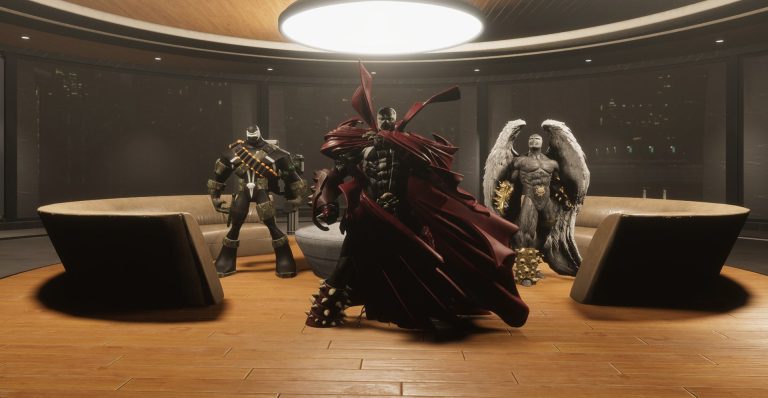
3D character support inside larger digital products, including our work within McFarlane Toys’ Collectors Universe platform.
VR & Digital-Twin Assets
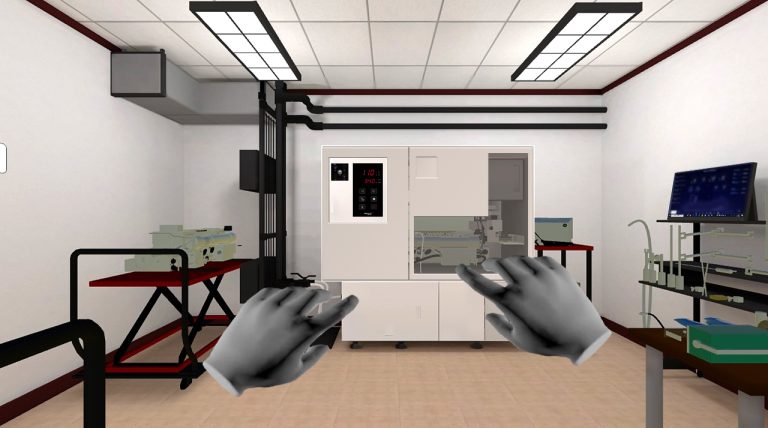
Accurate models of real equipment for VR training and simulation, where correctness matters more than polish because people learn real procedures on them.
Game & Real-Time Assets
Stylized art and real-time-ready models built to polygon and texture budgets, including asset work for the game Carnival of Truth.
Why 3D instead of product photography?
Once a product is modeled, everything downstream gets cheaper: new angles, new colorways, exploded views, lifestyle scenes, and animation all come from the same asset with no studio day, no shipping samples, no reshoots. For products that are small, shiny, translucent, or not manufactured yet, 3D is often the only way to get the shot at all. The honest counterpoint: for a one-off hero shot of an existing product, a photographer can still be the right call.
One asset, many uses
The quiet economics of 3D: the model is the expensive part, and everything after it is comparatively cheap. The product model that produced your marketing stills can become a 360 spin, an AR try-before-you-buy experience, a web configurator with every colorway, or a training asset, without starting over. This is why we build even marketing-only assets cleanly; a good share of 3D engagements eventually grow a second use, like the training program whose equipment models became a multi-year VR curriculum. If a real-time future is plausible for your asset, say so at the brief stage and we’ll build for it from day one.
Why SLIDEFACTORY?
Because the four lanes live in one Portland studio. The team that renders your product also builds real-time assets for Unity and VR, which means your 3D investment can travel: a product model becomes a configurator, a training asset, or an AR experience without starting over. We’ve been shipping 3D work inside larger digital products since 2018, and the project pages above are the proof, not a showreel.
Related Solutions

AI Consulting & Development
Start with the business problem, not the assumption that AI is the answer. Based in Portland, we help companies locally and nationwide evaluate the opportunity, then design and build agents, automation, integrations, and AI-enabled products.
Explore AI Development →
Augmented Reality & Virtual Reality Experiences
Create AR/VR, mixed reality, VR training, simulations, product visualization, and interactive experiences that combine software, UX, 3D, mobile, and emerging technology.
Explore AR/ VR Solutions →
Creative & Generative AI Production
Use generative AI for video, imagery, content, prototypes, and interactive experiences. We combine new AI production tools with the design and technical work needed to put them to practical use.
Explore Creative AI →
Mobile App Development
Develop custom mobile applications to enhance user engagement and drive business growth.
Explore Mobile Development →
Portland Digital Marketing Agency
Help the right people find what you’ve built. Our SEO and digital marketing work helps both Oregon companies and companies nationwide, connecting technical SEO, content, local discovery, analytics, conversion, and AI search visibility.
Explore Marketing Solutions →
Portland Web Design & Development
Build or improve a website around what it needs to accomplish. Our Portland web design team brings together strategy, UX/UI, development, CMS, performance, SEO, and ongoing improvement.
Explore Web Development →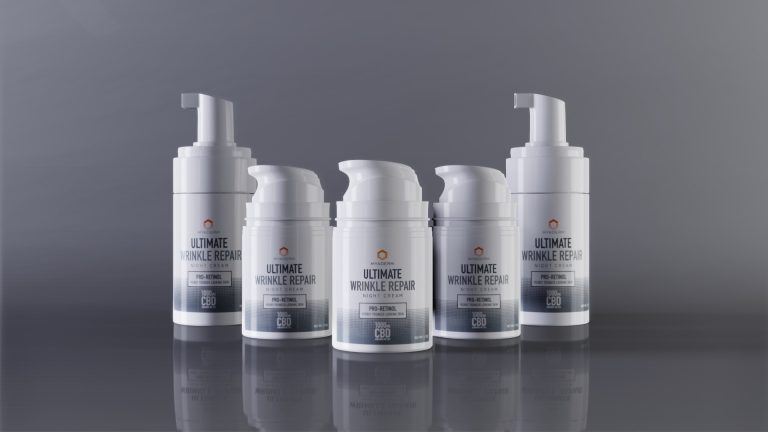
Frequently Asked Questions
How much do 3D product rendering services cost?
It depends on three things: how complex the asset is, whether you need stills or animation, and how many variants you want. A single photoreal product render is a very different project than a thirty-second animated commercial or a library of fifty real-time assets. We give a fixed estimate after seeing your product files and a short brief, and if photography would honestly be cheaper for what you need, we’ll tell you that instead of selling you 3D.
What do we need to provide to get started?
CAD files, product samples, or even good reference photos all work as starting points. If the product doesn’t exist yet, we can model from drawings and specs, which is one of the cases where 3D is the only option.
What deliverables do we get?
Whatever the medium needs: high-resolution stills, animation files, or real-time-ready assets for Unity, VR, and AR. Because we build for real-time too, a marketing render can later become a configurator or training asset without starting over.
Do you use AI in your 3D work?
Four lanes, each with shipped work behind it:
Product rendering and animation. Photoreal renders and animation for marketing, like the Myaderm healthcare commercial we produced with 3D animation and editing. Product renders are the lane most clients come for: variants, impossible camera moves, and packaging shots without a reshoot.
Character work. 3D character support for larger digital products, most visibly inside McFarlane Toys’ Collectors Universe. To be precise about that credit: the build itself was a Unity digital-collectibles platform, and our 3D character work was one component of it.
VR and digital-twin assets. Accurate 3D models of real industrial equipment for VR training, where the asset has to be correct, not just convincing, because people learn hazardous procedures on it.
Game assets. Stylized art and real-time-ready models, including asset work for the game Carnival of Truth. Real-time constraints (polygon budgets, texture atlases, LODs) are a different craft than render-farm work, and we do both.
How does AI fit into 3D production?
We use generative tools where they genuinely speed things up (concepting, texture exploration, motion tests) and hand-model where fidelity matters, which is most of the time in product and training work. Our creative and generative AI production practice covers the full pipeline, and for moving pictures built around that pipeline, see AI video production. The split we hold to: AI compresses production, it doesn’t remove the craft.
How does a 3D rendering project run?
Five steps, and you see the work at each one. First, inputs: CAD files, product samples, drawings, or reference photography, whatever exists. Second, modeling: we build the asset to the tolerance the job needs, which is different for a hero marketing render than for a real-time training asset. Third, materials and lighting: this is where photorealism actually lives, and where we spend disproportionate time on products with glass, metal, liquid, or skin. Fourth, review rounds against the shot list you approved, so feedback lands on specific frames instead of vibes. Fifth, delivery in the formats your channels need.
What formats and specs do you deliver?
For stills: high-resolution product renders sized for web, retail, print, and marketplace requirements, including Amazon’s white-background specs. For motion: animation delivered as finished video, or as passes your editor can work with. For real-time: optimized glTF, FBX, or engine-ready assets with polygon budgets, LODs, and texture atlases appropriate to the target platform, whether that’s a web configurator, Unity, or a VR headset. If you already have a pipeline, we match its conventions rather than making you adapt to ours.