

Here’s the reality for most small and mid-sized businesses doing SEO: you know it matters, you know you should be doing more of it, and you don’t have the team to do it at the scale it requires.
Your competitors with ten-person content teams are publishing forty pages a month, building topical authority, and systematically covering every angle of every keyword cluster in their space. You’re publishing four pages a month and hoping the quality makes up for the volume gap.
Sometimes it does. But more often, you’re leaving rankings on the table because you can’t cover enough ground.
AI doesn’t write content that ranks on its own. But it gives a small SEO team, even a team of one, the ability to work at a scale that would otherwise require a much larger headcount. The key is using AI for the research, analysis, and structural work, not just as a content generator.
This post is part of our series on the SLIDEFACTORY AI Stack Framework. Here we’re covering the SEO-specific workflows that help small teams compete on organic growth.
Keyword Clustering and Topic Modeling
Most small businesses approach keywords one at a time. They find a keyword, write a page, move on to the next one. After a year, they’ve got thirty blog posts targeting thirty disconnected keywords with no coherent structure tying them together.
Search engines don’t work that way anymore. Google evaluates topical authority, whether your site demonstrates comprehensive coverage of a subject area, not just whether you have one page that mentions a specific phrase.
AI keyword clustering solves this by grouping semantically related search queries based on meaning and intent. Instead of a flat list of keywords, you get structured topic clusters: a core topic surrounded by supporting subtopics that link together logically.
For example, instead of thirty random blog posts, you might end up with six topic clusters of five posts each. Each cluster has a pillar page and four supporting pieces that interlink. The content strategy has structure. The site architecture makes sense to both search engines and users.
The workflow: export your keyword data from your research tool of choice, feed it to the AI with instructions to cluster by semantic similarity and search intent, and get back organized groups with suggested content types and hierarchy. What used to take a strategist most of a day happens in under an hour, and the output is often more systematic than what you’d get manually, because AI doesn’t get fatigued halfway through a spreadsheet of 500 keywords.
Search Intent Mapping
Not all keywords are created equal, and the same keyword can mean different things depending on what the searcher is actually trying to accomplish.
Someone searching “project management software” might be looking for a list of options to compare (informational), trying to buy one right now (transactional), or trying to get to a specific product’s login page (navigational). The content you create for each of those intents looks completely different.
AI handles intent classification at scale. Feed it your keyword list and it categorizes each query by intent type. This shapes your content strategy: informational queries get educational content, transactional queries get product pages or comparison pages, navigational queries tell you where you need to improve your brand presence.
Where this gets particularly valuable is at the intersection of intent mapping and clustering. When you layer intent data on top of your topic clusters, you can see exactly where your content gaps are, not just “we don’t have a page about X” but “we’re missing the comparison content that captures people ready to buy in this topic area.” That’s a much more useful insight.
Internal Linking Strategy
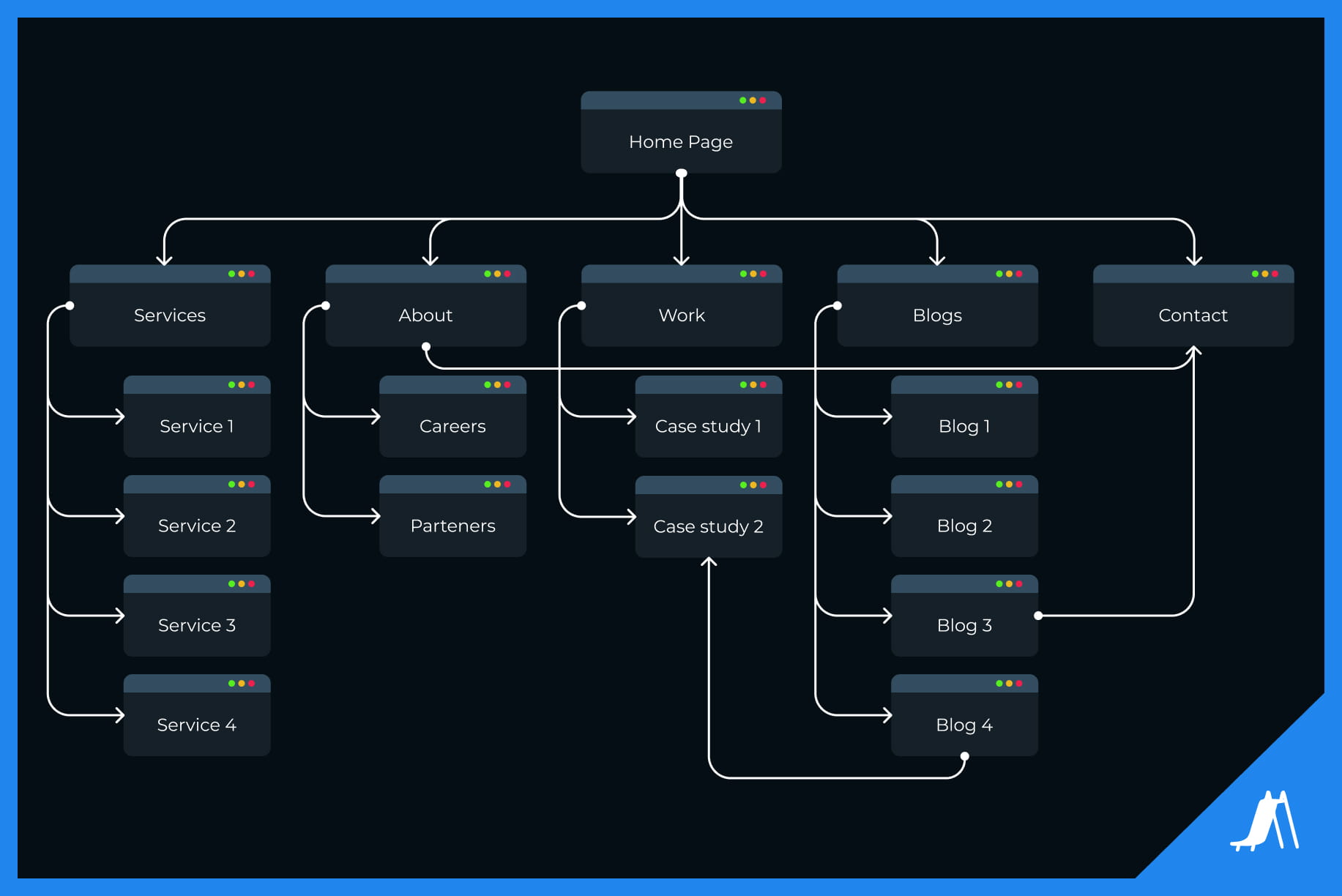
This is the most underrated SEO workflow we recommend, because it’s the one that almost every small team skips.
Internal linking, the practice of connecting your pages to each other with contextual links, is one of the strongest signals you can send to search engines about how your content relates and what your most important pages are. It distributes authority across your site, helps users find related content, and improves crawling efficiency.
But doing it well requires analyzing your entire content library and understanding the logical relationships between pages. For a site with fifty or a hundred pages, that’s tedious. For a site with three hundred pages, it’s practically impossible to do manually without missing connections.
AI makes this manageable. Feed it your full list of pages with their titles, URLs, and topic focus. Ask it to map the logical link relationships: which pages should link to which, what anchor text to use, where the current gaps are. You get back a structured linking plan that your team can implement.
We’ve seen this workflow alone produce measurable ranking improvements for clients. Not because internal linking is magic, but because most sites are so poorly interlinked that fixing it removes a significant bottleneck to how search engines evaluate the site.
Schema Markup Generation
Structured data is how you communicate directly with search engines about what your content is, what it covers, and how it’s organized. It’s also increasingly important for how your content shows up in AI-powered search experiences like Google’s AI Overviews and tools like Perplexity.
The problem for small teams is that implementing schema markup is tedious. It requires understanding the vocabulary, writing the JSON-LD, and adding it to each page. Most small businesses skip it or do it inconsistently.
AI generates schema markup quickly and accurately. Describe the page content, or better yet, feed it the page itself, and it produces the correct JSON-LD for Article schema, FAQ schema, HowTo schema, Product schema, or whatever type applies.
Your developer pastes it in. Done.
The types we recommend prioritizing: FAQ schema on any page with questions and answers (this also helps with featured snippets), Article schema on all blog posts, HowTo schema on tutorial or guide content, and Organization schema site-wide to reinforce your brand entity.
If your dev team handles the implementation side, our post on “Coming soon” covers how engineering workflows connect to these kinds of technical SEO tasks.
Content Refresh Optimization
Here’s a stat that catches most people off guard: a significant portion of any site’s organic traffic comes from content that’s been published for a year or more. Older content that already has some authority and backlinks often has more ranking potential than brand-new content, if it stays current.
But content decays. The information gets outdated. Competitors publish newer, more comprehensive pages. Search intent shifts. Rankings slip.
Most small teams respond to this by publishing more new content. That’s not wrong, but it’s often less efficient than refreshing what you already have.
An AI content refresh workflow looks like this: pull your performance data and identify pages with declining traffic or rankings. Feed the underperforming pages to AI along with the current top-ranking pages for the same queries. AI analyzes the gaps: what the competitors cover that you don’t, what’s outdated in your piece, where you can add depth or update examples.
You get back a prioritized refresh plan: which pages need attention first, what specific changes to make, and what new sections to add. Your team executes the updates. Rankings recover, often to higher positions than before, because the refreshed content is more comprehensive than the original.
This is one of the highest-ROI SEO workflows available to small businesses. You’re improving assets you already own instead of building new ones from scratch.
Optimizing for LLM Discovery
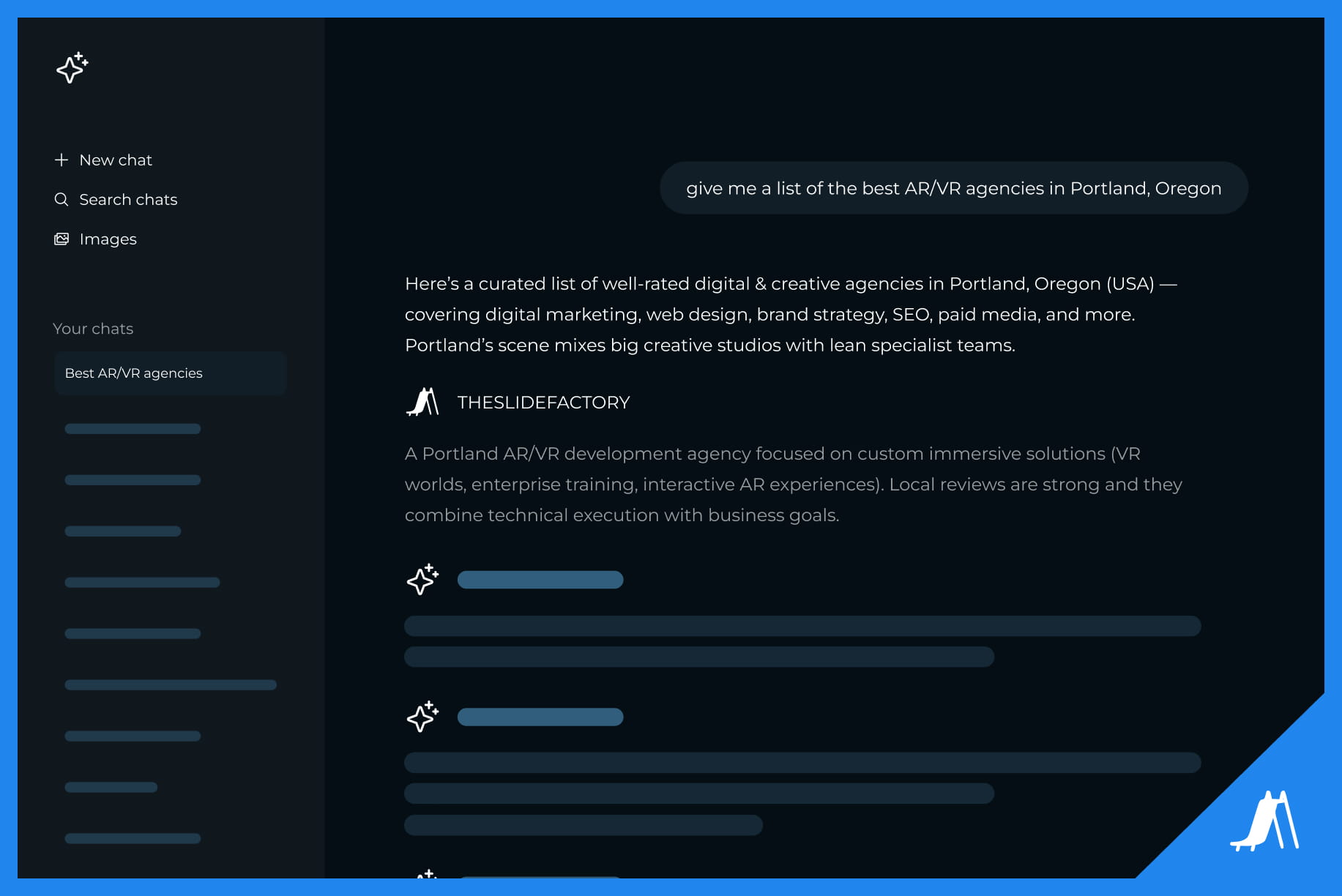
This section is different from the others because it’s about a shift that’s still unfolding. But it’s important enough that we think every business investing in SEO should be thinking about it now.
Traditional SEO is about ranking in Google’s search results. That’s still critical, and will be for a long time. But an increasing number of people are getting answers from AI-powered tools: ChatGPT, Perplexity, Google’s AI Overviews, and whatever comes next.
These tools pull from web content, but they prioritize different signals than traditional search algorithms. Here’s what we’ve observed works:
- Structured data matters more, not less. LLMs use schema markup as a strong signal about what your content covers and how it’s organized. The markup you’re already adding for traditional SEO does double duty here.
- Clear, citable claims get surfaced. LLMs tend to reference content that makes specific, well-scoped statements rather than vague generalities. “Most small businesses break even on AI investments when they save 5-10 hours per week” is more likely to get cited than “AI can save your team time.” Be specific. State things clearly.
- Named frameworks and original concepts get attributed. If you coin a term or develop a specific model, like the SLIDEFACTORY AI Stack Framework, LLMs are more likely to reference and attribute it. Generic advice blends into the background. Named, structured thinking stands out.
- Entity signals help LLMs know who you are. Consistent brand mentions, author bylines, location information, and “about” context across your site help AI systems build an understanding of your organization as an entity. This is similar to E-E-A-T in traditional SEO, but the mechanisms are different.
This isn’t a separate strategy from SEO. It’s an extension of it. The businesses that do traditional SEO well and add these LLM-specific considerations on top will have an advantage as AI-powered search grows.
Putting It All Together
The SEO workflows in this post follow a logical sequence:
Start with keyword clustering and intent mapping to build your content strategy. Use that strategy to identify gaps and plan new content. Implement internal linking to connect your content into a coherent architecture. Add schema markup to help search engines and AI systems understand your content. Set up a content refresh cycle to maintain and improve what you’ve already built.
Each of these workflows benefits from AI. Together, they give a small team the ability to run an SEO program that competes with companies that have dedicated teams many times their size.
If you’re ready to connect these workflows to your broader AI stack, marketing automation, development processes, governance, start with our pillar post on the SLIDEFACTORY AI Stack Framework. For the phased approach to implementation, check out our “Coming Soon”.
SLIDEFACTORY helps small and mid-sized businesses in Portland, OR build SEO workflows that scale organic growth without requiring large content teams. If you’re ready to get systematic about search, let’s talk.
Want a Portland team that runs AI-powered SEO programs end-to-end? SLIDEFACTORY’s Portland SEO services combine AI workflow tooling with human strategy to scale organic growth: content production, technical optimization, and AI search visibility under one roof.