

If you run marketing at a small or mid-sized business, you know the math doesn’t work. You’ve got six channels to manage, two product launches coming up, a content calendar that’s already behind, and a team that’s either you and one other person or just you.
AI doesn’t fix your strategy. No tool does. But it absolutely multiplies your team’s ability to execute on that strategy, which, for most SMBs, is the actual bottleneck.
This post is part of our series on the SLIDEFACTORY AI Stack Framework. Here we’re focusing on the marketing-specific workflows that we’ve seen deliver the most value for small teams.
The Shift: From “Help Me Write This” to Repeatable Workflows
Most marketers start with AI the same way: they open ChatGPT, type “write me a blog post about X,” get something back, spend thirty minutes editing it, and call it a win.
That’s fine as a starting point. But it’s not marketing automation. It’s outsourcing a first draft to a chatbot.
Real AI marketing automation means building workflows where specific inputs produce structured outputs on a repeatable basis, with AI doing the heavy lifting in the middle and your team doing the strategic thinking on either end.
Here’s what that looks like across the marketing functions where we see the biggest impact.
Landing Page Development
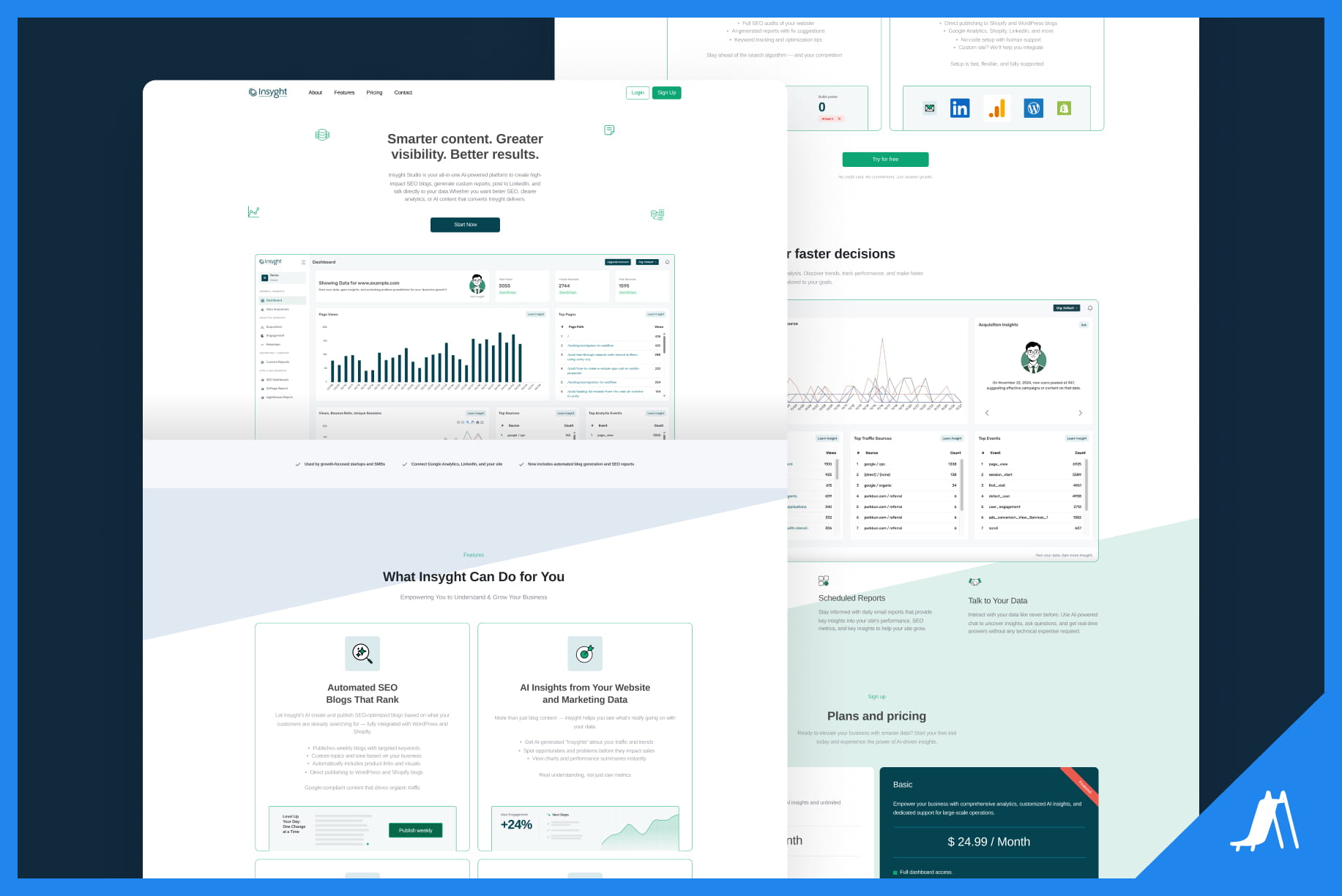
Landing pages are one of the most time-consuming things marketing teams produce. The copy needs to be SEO-aligned, conversion-focused, and consistent with your positioning. Most teams either spend too long perfecting each one or ship them too fast and wonder why they don’t convert.
A solid AI workflow for landing pages looks like this:
You start with a template that includes your brand’s messaging hierarchy, your target keyword, the audience segment, and the page goal. AI generates a structured first draft that hits the SEO targets and follows your conversion framework. Your team reviews, edits for voice and accuracy, and ships.
What used to take a copywriter most of a day becomes a two-hour process. More importantly, the output is consistent because the inputs are standardized.
For headline testing, AI is especially useful. Give it your value prop, your audience’s pain points, and your constraints, and it’ll generate twenty headline variations in under a minute. Your team picks three to test. This is work that used to require a brainstorming session, now it’s a prompt and a ten-minute review.
We also use AI for competitor comparison summaries. Feed it three or four competitor landing pages and ask for a structured analysis of their messaging angles, CTAs, and positioning. Instead of spending an hour clicking through competitor sites, you get a side-by-side breakdown in minutes.
Ad Creative Testing
Paid media eats creative. You need variations for different audiences, different placements, different stages of the funnel. Small teams either burn out trying to keep up or end up running the same three ads for months because nobody has time to write new ones.
AI changes the economics here. The workflow we recommend starts with your campaign objective, audience definition, and core offer. AI generates angle variations, not just different wording of the same ad, but genuinely different approaches to the same message.
For example, say you’re promoting a project management tool for small teams. AI might produce angles based on time savings, angles based on reducing miscommunication, angles based on looking more professional to clients, and angles based on avoiding the chaos of scaling without systems. Those are four different hypotheses about what will resonate, not four rewrites of the same headline.
From there, AI can help structure your A/B test plan. Which angles test against each other? What’s the minimum budget needed for statistical significance? What does your measurement framework look like?
The point isn’t that AI writes better ads than your team. It’s that AI generates the raw material so your team can spend their time on strategy and analysis instead of staring at a blank Google Doc.
Email Marketing Workflows

Email is the marketing channel where AI automation arguably delivers the most disproportionate value. Here’s why: email programs are built on sequences, triggers, and personalization. Those are all things that scale badly with human effort and scale well with AI.
A welcome sequence for a new subscriber used to mean a copywriter spending a day or two writing five to seven emails, thinking through the logic of each send, and mapping out the behavioral triggers. AI compresses the drafting down to an hour. Your team still designs the strategy, still decides what content goes where, still reviews every email before it goes live. But the first-draft bottleneck disappears.
Behavioral trigger emails get even more interesting. When someone abandons a cart, downloads a resource, visits a pricing page three times, or goes quiet for sixty days, each of those moments is a chance to send a targeted message. Most small businesses know this but don’t have the bandwidth to write all the variations. AI does.
We also use AI for engagement analysis summaries. Pull your email performance data, feed it to the model with the right prompt, and get back a structured breakdown of what’s working, what’s underperforming, and what to test next. It’s not replacing your judgment, it’s giving you a briefing so you can make better decisions faster.
Content Repurposing (The Highest-ROI Workflow We See)
This is the one we recommend to almost every SMB we work with at SLIDEFACTORY, because it addresses a problem that’s practically universal: businesses create good content and then dramatically under-distribute it.
You publish a solid blog post. It lives on your site. Maybe you share it on LinkedIn once. That’s it.
A content repurposing workflow turns one piece of content into five or six:
The blog post becomes a LinkedIn post (not just a link, an actual post that stands on its own). The key insights become an email to your list. The stats or data points become shareable graphics. The core argument becomes an ad angle. If the post was based on original research or a case study, the narrative becomes a short video script.
AI handles the transformation. Your team handles the quality check and the strategic decisions about where each piece goes.
We worked with a client here in Portland who was publishing two blog posts a month and doing nothing else with them. After building a repurposing workflow, those two posts were generating eight to ten additional content pieces across LinkedIn, email, and paid channels. Same content investment, five times the distribution. That’s the kind of math that matters for small teams.
The Critical Piece: Pair AI with Analytics
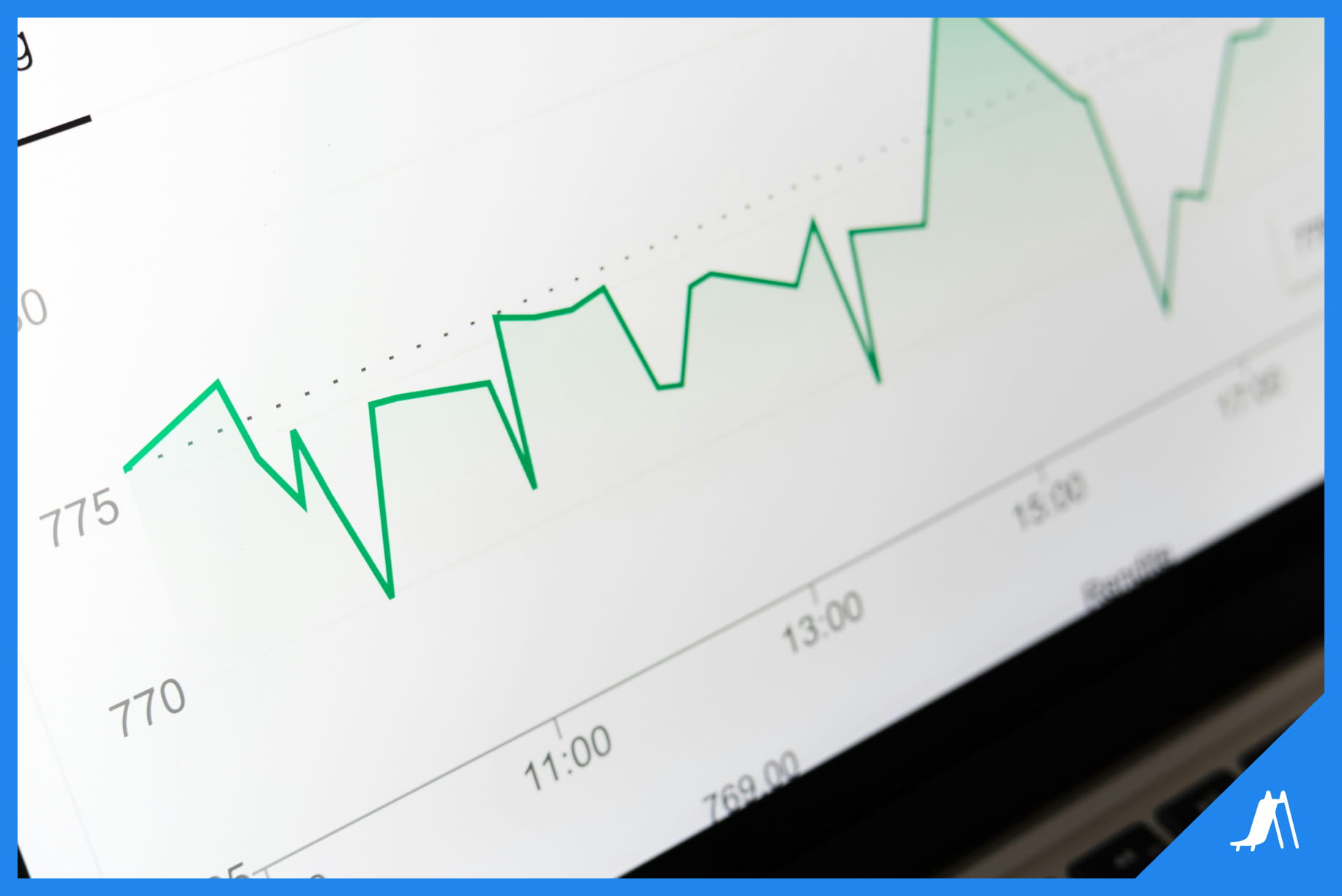
Here’s where a lot of AI marketing automation falls apart. Teams build the generation workflows but skip the measurement loop.
Content shouldn’t just be generated. It should be measured, and the measurements should feed back into the next round of generation.
Which landing page headlines converted best? Feed that data back into your next prompt. Which email subject lines got the highest open rates? Use those patterns as constraints for future drafts. Which ad angles outperformed? Double down on those hypotheses.
This is the difference between using AI to produce more stuff and using AI to produce better stuff over time. The feedback loop is what turns volume into performance.
If you’re interested in how this connects to your broader search strategy, our post on “coming soon”covers the optimization side in detail.
Getting Started Without Overcomplicating It
You don’t need to build all of these workflows at once. Pick the one that addresses your team’s biggest bottleneck right now.
If you’re drowning in content demands, start with repurposing. If your landing pages take too long, start there. If your email program is stale because nobody has time to write new sequences, that’s your entry point.
Build one workflow. Use it for two to three weeks. Measure what it saves you. Then build the next one.
Our “coming soon” walks through the phased approach in detail, including how to set up governance and track ROI.
The goal isn’t to automate everything overnight. It’s to systematically free up your team’s strategic capacity by offloading the repetitive production work that eats most of their time.
Your marketers should be thinking, not typing. AI handles the typing.
SLIDEFACTORY helps small and mid-sized businesses in Portland, OR and beyond build marketing workflows that scale. Ready to multiply your team’s output? Let’s talk.
Looking to multiply your marketing team’s output without growing headcount? SLIDEFACTORY’s AI marketing automation services design and ship the workflows that small teams use to compete with much larger ones.