UX & Product Design
Product and experience design for software, applications and immersive products. Research, definition, interface design, prototyping and design systems.
Companies we've collaborated with








UX and product design for software that people use
The most expensive product problems often show up after development begins: a workflow that makes sense to the team but confuses users, a screen that hides the next step, or a feature that solves the wrong problem. Our UX design services help work through those decisions early and refine them as people use the product.
SLIDEFACTORY is a Portland product design agency designing websites, web and mobile applications, AI tools, and AR and VR experiences. We can take a product from discovery and wireframes through visual design and development, or work with your existing development team. The goal is a clear experience your team can build, test, and improve.
What our UX and product design services produce
Not every project needs all of it. The mix depends on whether you are defining something new, fixing something that exists, or scaling something that already works.
Research and user workshops
We meet with stakeholders and, when appropriate, the people who will use the product. We document their goals, the steps they take today, and where they get stuck. Sessions may happen in person or over Zoom.
Product discovery and definition
We turn an idea, existing workflow, or collection of requirements into a workable product direction. The output may include prioritized use cases, audience needs, feature boundaries, and a plan for what to validate first.
UX audits
If a product already exists, we review its main user paths and interface for friction, confusing decisions, and inconsistent patterns. We give your team a prioritized list of issues and suggested changes that can guide redesign or incremental improvements.
User flows and wireframes
We map how users get from one task to the next, then sketch the structure of key screens. Wireframes settle hierarchy and behavior before detailed visual work makes a weak flow expensive to change.
Prototypes
The level of detail depends on what we need to learn. A low-fidelity prototype can test the order of steps. A more detailed, interactive prototype can test navigation, screen transitions, and a proposed interface before engineering commits to it.
Interface design
We design the finished screens, visual hierarchy, states, and interactions for web, mobile, and immersive products. Where a new brand is part of the assignment, the work can also include identity, color, and graphic direction, as it did for Sacramento Orthopedic Sports & Shoulder.
Design systems and developer handoff
For products that need repeated patterns, we organize reusable components and usage rules. We provide the designs, interaction notes, and assets developers need, and can stay involved as the implementation reveals new questions.
How a design engagement runs
We typically begin with about one week of discovery to understand the business goal, users, existing product, and technical constraints. Wireframes usually take one to three weeks, depending on how many journeys and screens are involved. Prototyping can take another one to three weeks, followed by one to three weeks for UI design. Some work overlaps; some products need only part of this sequence.
We use Figma for collaborative interface work, alongside Adobe Photoshop and Illustrator for visual assets. We review work at useful decision points, gather feedback, and define the expected review and revision schedule in the project scope. A larger application or a complex VR experience will need a different cadence from a focused website redesign.
Put the work in front of users
A polished screen cannot tell us whether a person understands what to do next. Depending on the project, we run workshops and working sessions with users onsite or over Zoom, then use what we observe to revise the flow, labels, interactions, and priorities. That feedback can be especially valuable when the product serves different groups with different goals.
For Byldr, a VR tool for building experiences from inside VR, we designed the UX and interface and revised the product through multiple rounds of user testing. In a product where people create, manipulate, and publish within a headset, the interaction design has to be tested in the environment where it will be used. See the Byldr project.
Designing interfaces for AI features
An AI feature needs more than an input box. Users need to know what the system is doing, what information it used, and what they should check before relying on an answer or taking action. The interface should make a suggestion easy to review and a mistake easy to correct.
We have designed interfaces for CodeRaven, our AI code-review product, and Insyght, our AI business agent. Our work also includes AI-enabled educational learning applications. The details differ across a code review, an analytics question and a learning activity, but the design work starts with the same questions: who needs the output, what decision are they making, and where should a person remain in control?
UX for AR, VR, and mixed reality
In an immersive product, the interface surrounds the user. Navigation, hand or controller input, readable content, onboarding, and physical comfort all affect whether an experience works. A desktop mockup can establish direction, but real testing in the headset exposes issues that a flat screen cannot.
Byldr went through extensive UX work and multiple changes as we tested with users. For Gigaphoton’s VR training, we revised the experience multiple times as we identified motion sickness and physical strain. Those findings affected the UX during the build, when we could still adjust how people moved through and used the training environment. Read more about UX for mixed reality and the fundamentals of spatial UX.
The design problem is usually who sees what
On most products we work on, the hard design question is not how a screen looks. It is that several different people need different views of the same underlying content, with different permissions and different jobs to do.
On one education platform that meant an administrator, a teacher and a learner each working over one shared content library, plus authoring tools so the client team could produce new material without coming back to us. On a machine-learning recommendation experience the design question was how much the system decides and how much the educator does. On a VR authoring tool the interface is itself inside virtual reality, where none of the usual conventions apply.
That is the pattern worth knowing about us: the design decisions and the engineering decisions get made by people who have to live with both.
Three ways this usually starts
You have an idea and no specification. The work starts with research and definition and ends with something specific enough to estimate and build.
You have a product people find hard to use. The work starts with the existing product and its users, and identifies what to change first rather than proposing a rebuild.
You have a product that works and a team that keeps diverging. The work is a design system, the components under it, and the rules for adding to it.
Selected UX work
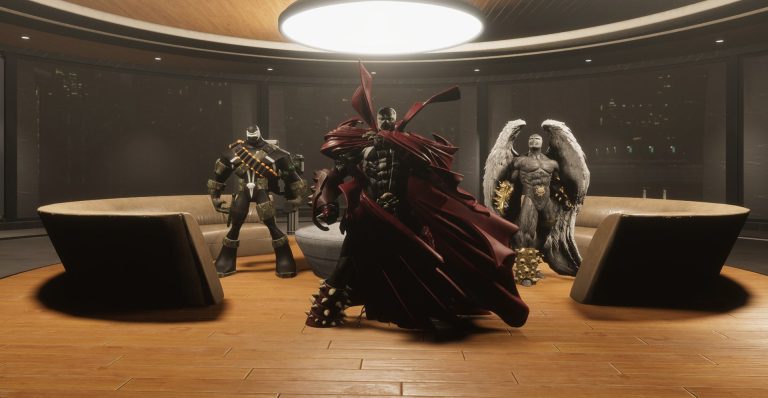
McFarlane Toys Digital: from wireframes to a Unity experience
Our team carried out the UX phase, wireframes, interface design, and build for the Unity application. Collectors use the viewer to display animated digital collectibles and customize gallery spaces.
View the project →
Sacramento Orthopedic Sports & Shoulder: UX, brand, and website design
We developed the practice’s brand direction, colors, logo, website UX, and visual design. Its website and ongoing SEO work has generated 753,000+ Google Search impressions and 7,160+ clicks in the reporting period.
View the project →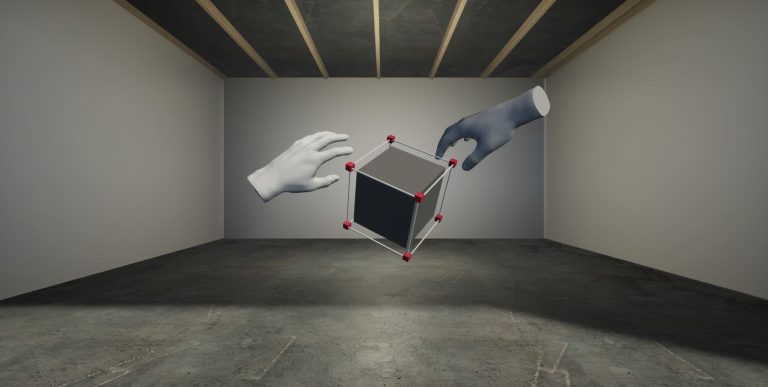
Byldr VR World Builder
A code-free authoring tool where the interface lives inside virtual reality, with hand tracking and custom 3D assets. Interaction design without the usual screen conventions to fall back on.
View the project →Design handed over, or design and build
Handover means files, specifications and the reasoning behind the decisions, in a form another team can build from. Design and build means the same group carries a decision from research through to production, which is usually faster and produces fewer arguments about what was meant.
If you already have a product team we can take a defined part of the work, such as research, one flow, or the design system, and leave the rest with you.
See our custom web and mobile applications and mobile development work.
Frequently Asked Questions
Is this the same as web design?
No. Web design produces a website. This work produces a product: software, an application, a learning tool, an internal system. The overlap is the craft, not the deliverable. If you need a site, our web design and development page is the right one.
Can you work with our existing product team?
Yes. We can take a defined part of the work, such as research, a specific flow, or a design system, and leave the rest with your team. We can also run the whole design track if there is no one to run it.
Do you hand over designs, or build them too?
Either. Handover means files, specifications and the reasoning behind the decisions. Building it means the design decisions and the engineering decisions stay with the same group, which is usually faster and produces fewer arguments about what was meant.
How do you handle accessibility?
We agree the criteria the product has to meet at the start, then carry them through design, development and testing rather than auditing at the end. The scope of the product determines the standard, and we say what we are working to rather than implying a certification.
What does a design engagement cost?
It depends on whether you are defining something new, improving something that exists, or building a design system, and on how much research the domain needs. We scope it with you and put the price in writing before the work starts.
Can you design something that is already built?
Yes, and it is the most common version of this work. We start with the existing product and the people using it, then identify what to change first. A redesign is sometimes the answer and often is not.
Do you build the tools our team uses, or only what the customer sees?
Both, and the internal side is frequently where the value is. On one education platform we built the authoring and editing tools the client team uses to produce new content themselves, alongside the learner-facing experience.
How long does UX design take?
Discovery is often about one week. Wireframes, prototypes, and interface design each typically take one to three weeks, depending on the number of workflows and the depth of the project. We scope the stages and review points before work begins.
Do you test designs with users?
Yes. We work with users through workshops and review sessions onsite or over Zoom where the project calls for it. The format and number of participants depend on the product and the people we need to learn from.
Do you audit existing products?
Yes. We can review an existing website or application, identify friction in important tasks, and recommend changes in priority order. An audit can lead to targeted improvements or inform a larger redesign.