A Japanese luxury brand across six markets
Since 1971, Majesty has made premium golf equipment shaped by Japanese craftsmanship. Its clubs are sold across Asia, North America and other international markets, where golfers encounter the same brand through different languages, product selections and networks of authorized retailers.
For someone researching a club, the website has several jobs. It needs to make the product understandable, show which models are available locally and help the visitor find a retailer. Doing that consistently across Japan, China, Taiwan, Korea, the United States and a global site is more complex than maintaining one catalog in one language.
Majesty was undertaking a worldwide redesign to bring these experiences together. Working alongside Majesty and its partner agencies, SLIDEFACTORY handled wireframes, web design and WordPress development for the six regional sites. After the initial builds, our role continued as the sites expanded and regional teams needed shared features, localization and ongoing support.
Wireframes, design and development
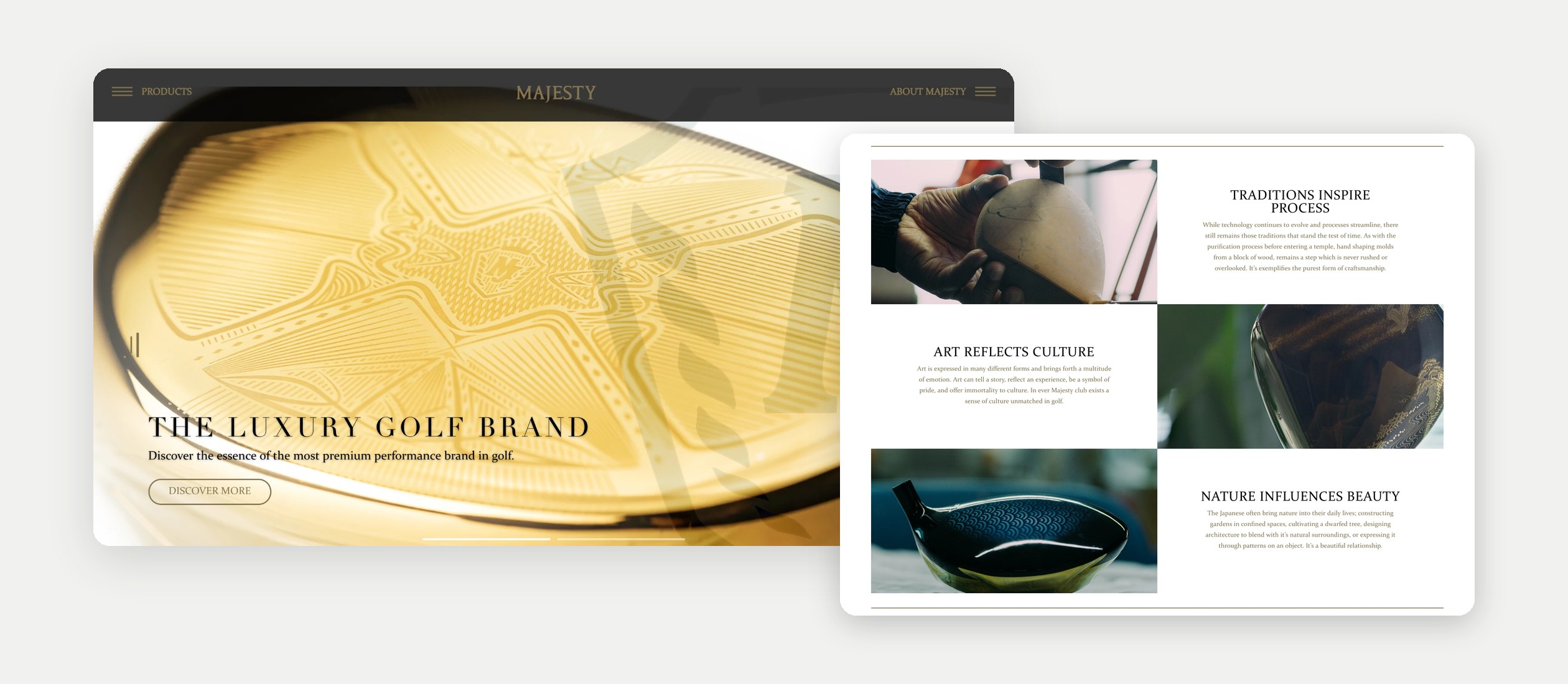
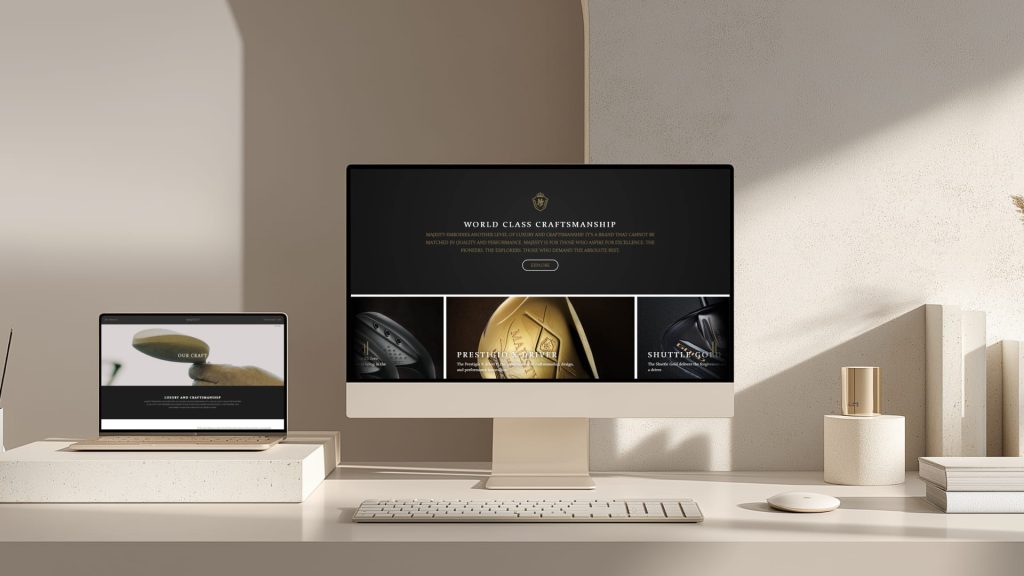
The site’s product photography had to carry much of the visual presentation, but visitors still needed a clear path from a club family to an individual model and then to a retailer. We began with wireframes for the homepage, product family and detail pages, news and events, and retail pages. That gave Majesty and its regional collaborators a common structure to review before visual design began.
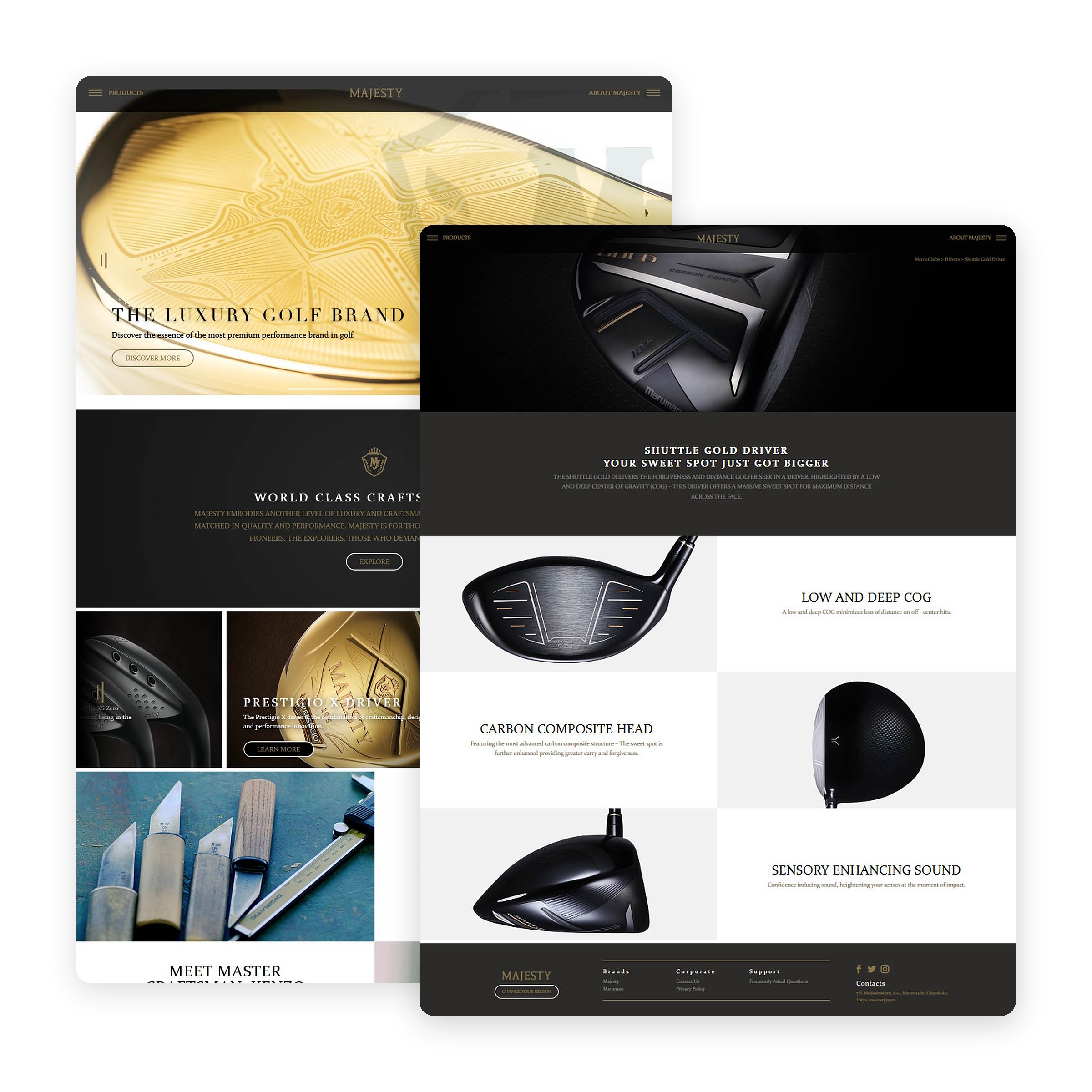
The final design used black and gold, serif capital headlines and full-width macro photography of the club heads. We accounted for Japanese, Chinese and Korean text as well as English while developing the layouts, then built the six WordPress sites on a shared set of templates. Each region could publish the language, products and dealer information relevant to its market without developing a separate site design.
Keeping six sites in step after launch
Once the sites launched, the shared templates had to hold up as different regional teams and vendors began updating content. A change that looked right in the US could render differently in Japan, while fonts, menus and server configurations varied from market to market. In the second half of 2019, we continued as the WordPress development partner across all six sites, coordinating fixes and new features with teams working in several languages and time zones.
Rather than treating each report as an isolated problem, we checked whether it affected other regions before distributing a fix. That approach shaped the work that followed, particularly the retailer locator, country routing and product page improvements.
A retail locator that worked in every language
An authorized dealer was the next step for visitors who wanted to examine a club in person. Each regional site needed its own dealer list, presented through an interface customers could use in their own language. We configured the locator in development and production, connected Google Maps and imported the regional dealer data.
The US, Taiwan and Korea implementations included name-based search and JavaScript filtering that narrowed results without reloading the page. We added pagination and mobile styling for long lists, translated the locator’s interface across the Japanese, Chinese and Korean sites, and resolved conflicts between the main site’s search plugin and the locator search.
Rollout followed the dealer data rather than a single worldwide launch. The locator went live region by region from September to October 2019.
Sending visitors to the right country
Even with a separate site for each market, a visitor arriving from a search engine could land in the wrong region and see products or retailers that weren’t relevant locally. We built IP-based routing to direct visitors to an appropriate regional site and wrote test cases that simulated connections from each target market before activating it. We later moved the redirect logic into server-side PHP.
Automatic routing was only part of the solution. We added a footer region selector and changed the cookies so a visitor’s explicit choice persisted between browser sessions. Cookie consent notices were also added to the regional homepages.
Product pages built for many products
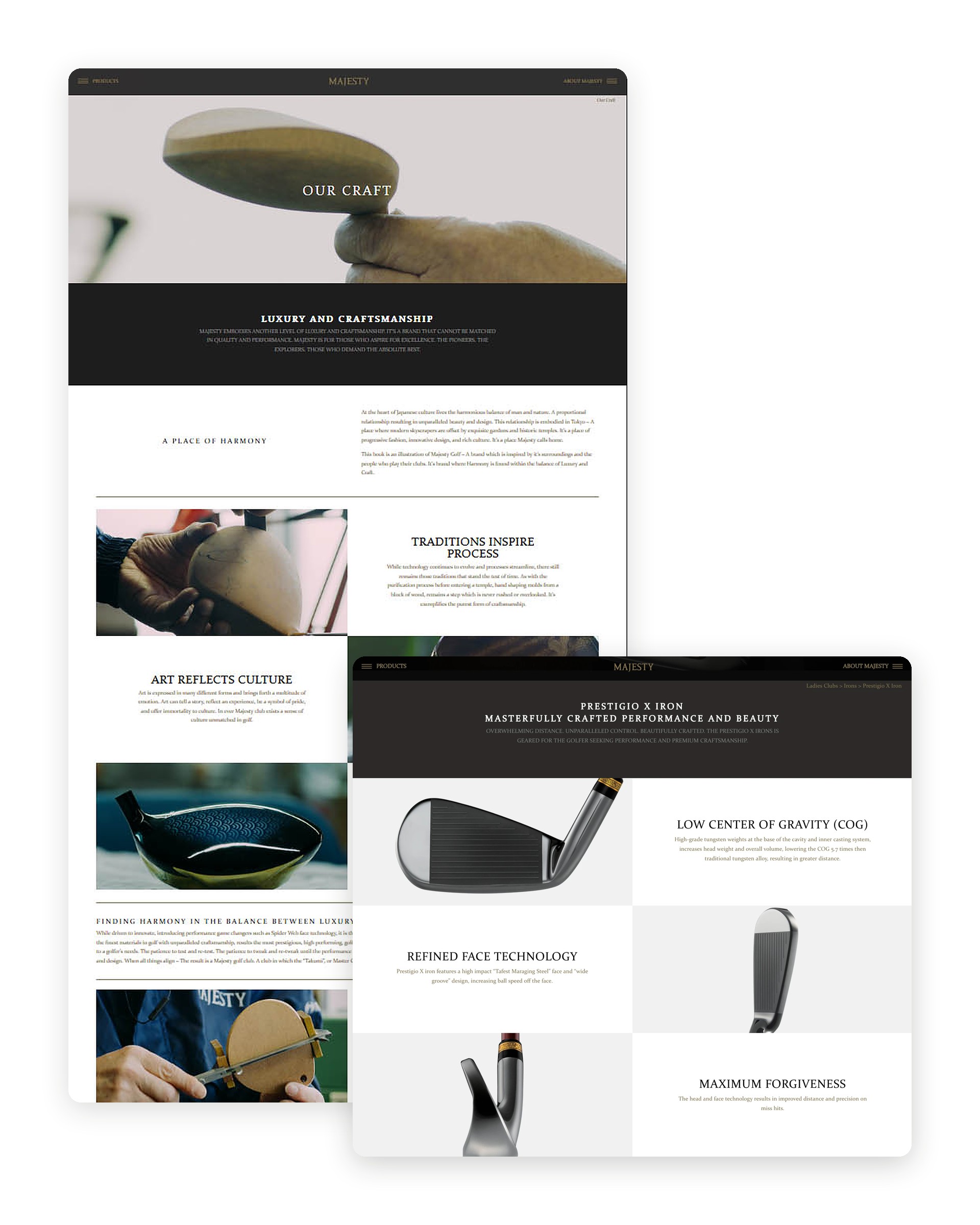
Majesty’s club families had multiple models and, in some cases, several pages for one product. The initial page-loading behavior caused problems with some of those longer product experiences. We developed Ajax-loaded templates using custom WordPress action hooks, allowing visitors to move between models without loading an entirely new page.
We also corrected video sizing so it behaved consistently whether a page loaded normally or through Ajax, and added an option to skip product videos. The updated templates were rolled out across the Global, China, Taiwan and Korea sites, followed by product page setup on Japan’s live site.
Fixing what regional teams found
Supporting an international rollout also meant dealing with problems that weren’t obvious from our own environment. A Japanese menu failure was traced to a modified server-side JavaScript file and corrected the same day it was reported. When a regional web application firewall blocked requests to WordPress’s admin-ajax endpoint, we rewrote the affected page template. Form and layout fixes for Internet Explorer 11 were applied to the US, Taiwan, Korea and Japan sites.
We restored a regional installation after a third-party update caused a failure, and worked around server errors on large content edits by syncing staging and production and editing in staging first. Other work included migrations for Japan, China, Taiwan and Korea, indexed search for Japan, category filtering for news and events, and consistent product names across regional menus.
Planning the next feature
With the international sites and core shopping paths in place, Majesty began exploring a further step in the customer relationship: an owners’ hub for people who had bought its clubs. We reviewed the brand’s documentation, wrote up open questions, met with the Japanese team, and produced a UX mockup of the owners’ hub for presentation.
A consistent brand experience across six markets
Majesty’s redesign established a common visual and technical foundation for six international websites without making every market identical. Customers could browse region-specific products, find local dealers and choose their preferred country, while the regional teams could continue working within a shared WordPress system. By November 2019, the work also included four regional migrations and updates to product pages, news and search across the websites.
As regional teams continued updating their sites, the shared system gave us a consistent place to make improvements without losing the local differences that mattered. The later exploration of an owners’ hub pointed toward another part of the customer journey, beyond product discovery and retail. Across the redesign and ongoing support, the central idea remained the same: six distinct regional experiences that still felt like one Majesty brand.