Organizing news as the pandemic began
Following one developing story can mean jumping between many publishers, topics and locations. TopicHubs was exploring a different format for news discovery: topic-centered pages that gathered reporting from multiple sources and organized it into categories and streams.
The startup began working with SLIDEFACTORY on the user experience in January 2020. By March, the emergence of COVID-19 gave the concept an immediate public use. Readers needed a way to follow changing information across different subjects and regions, while the company needed a working hub much sooner than a conventional product schedule would allow.
We moved from interface design into development and launched the Coronavirus Topic Hub 16 days after its March 3 kickoff, on March 19, 2020. The initial release was followed by a rebuild on WordPress and Google Cloud so the project could support more topics and future hubs.
Designing a new way to follow a topic
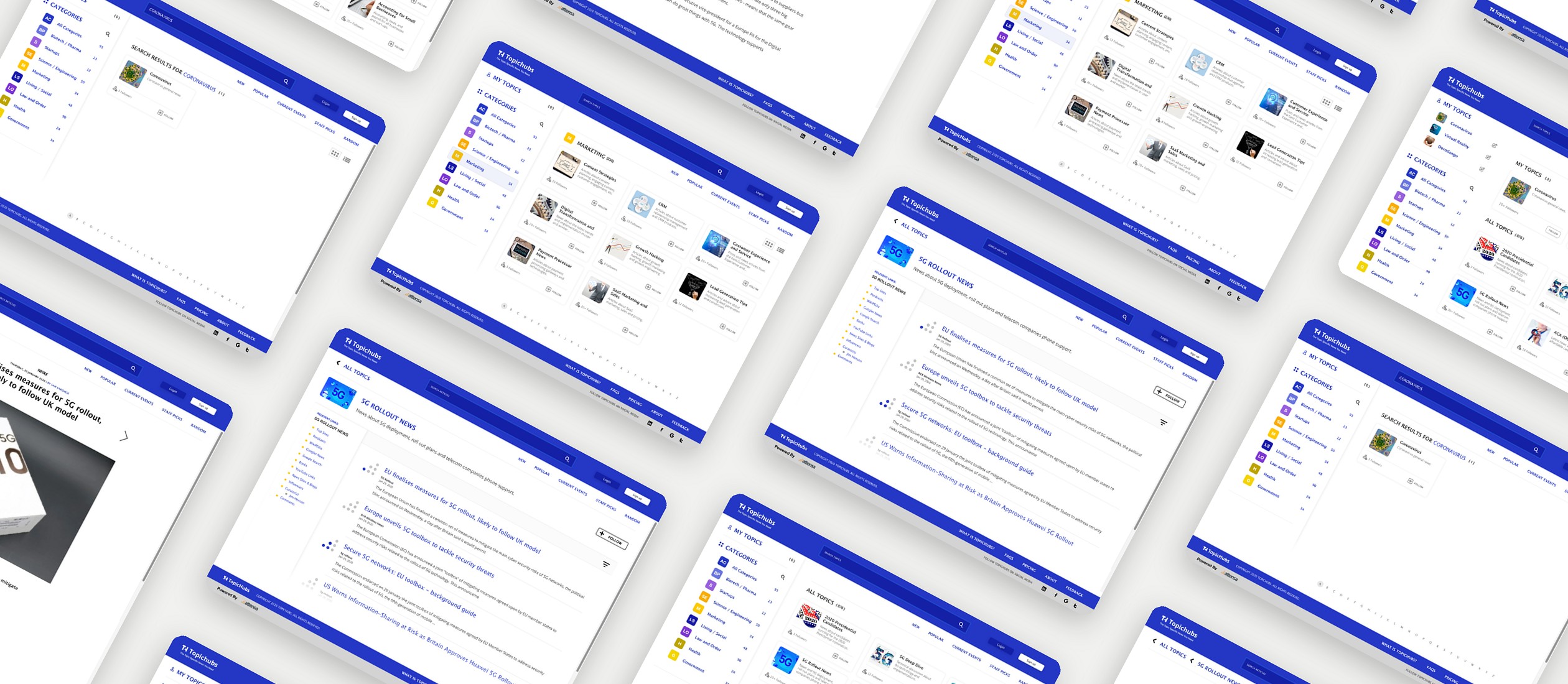
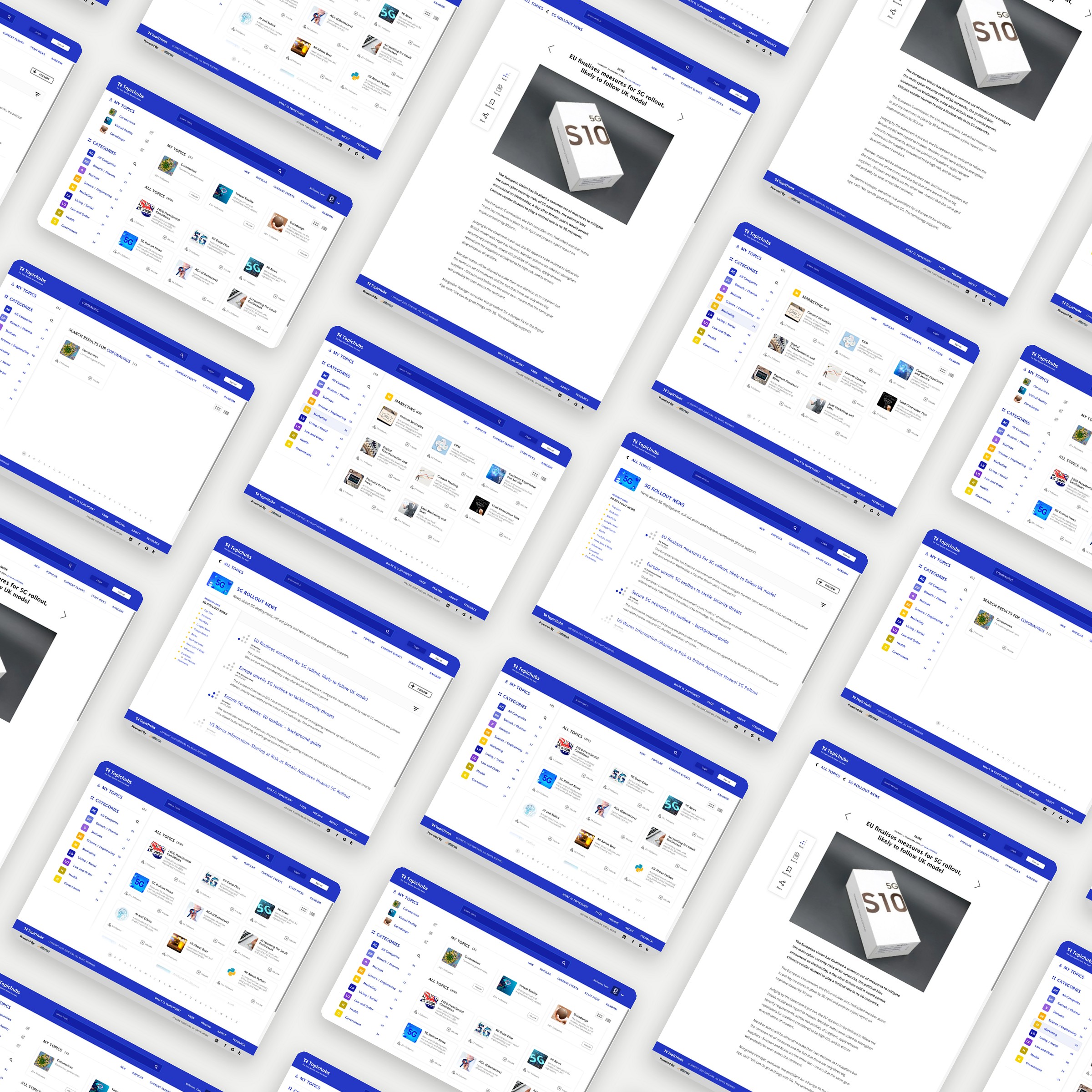
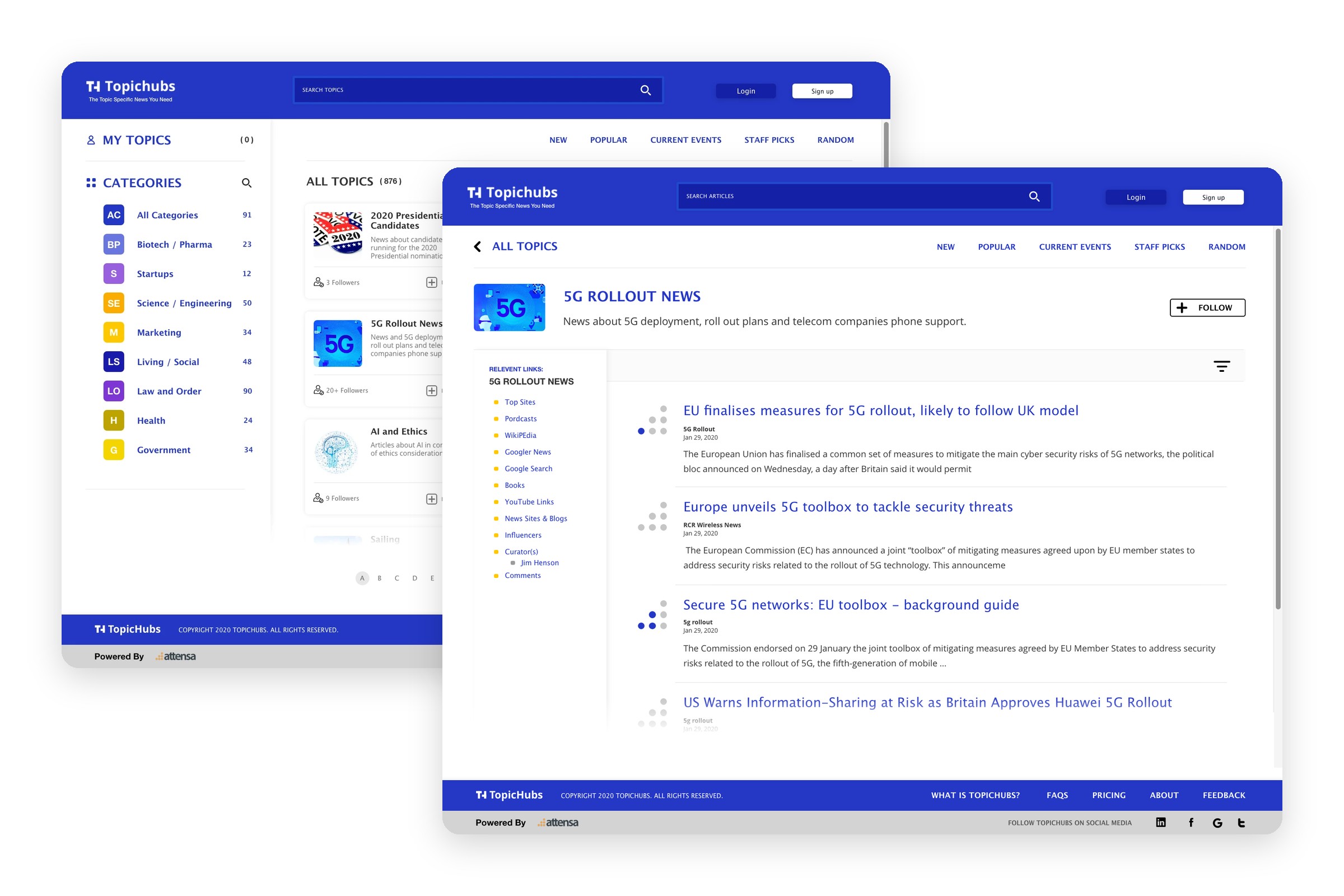
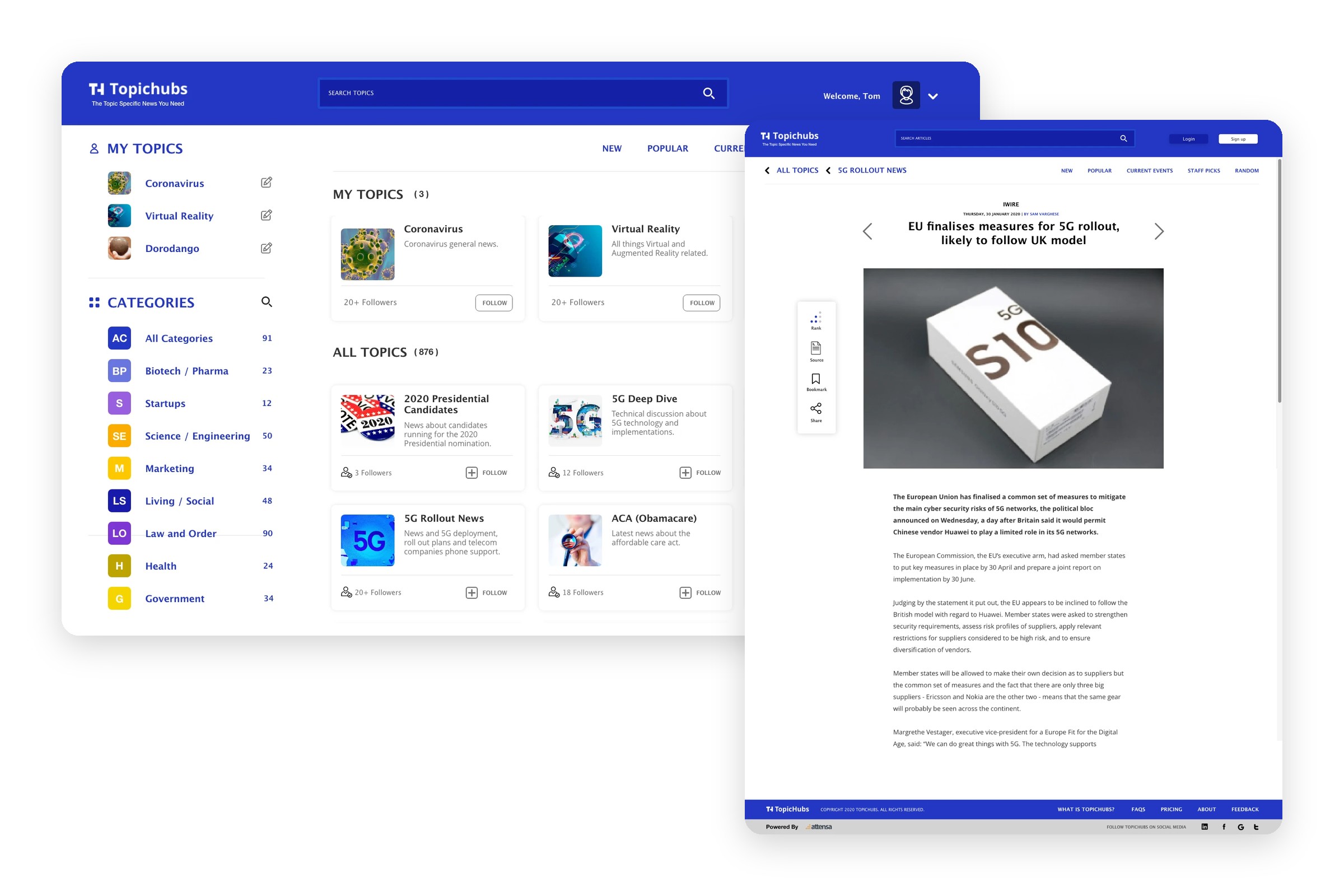
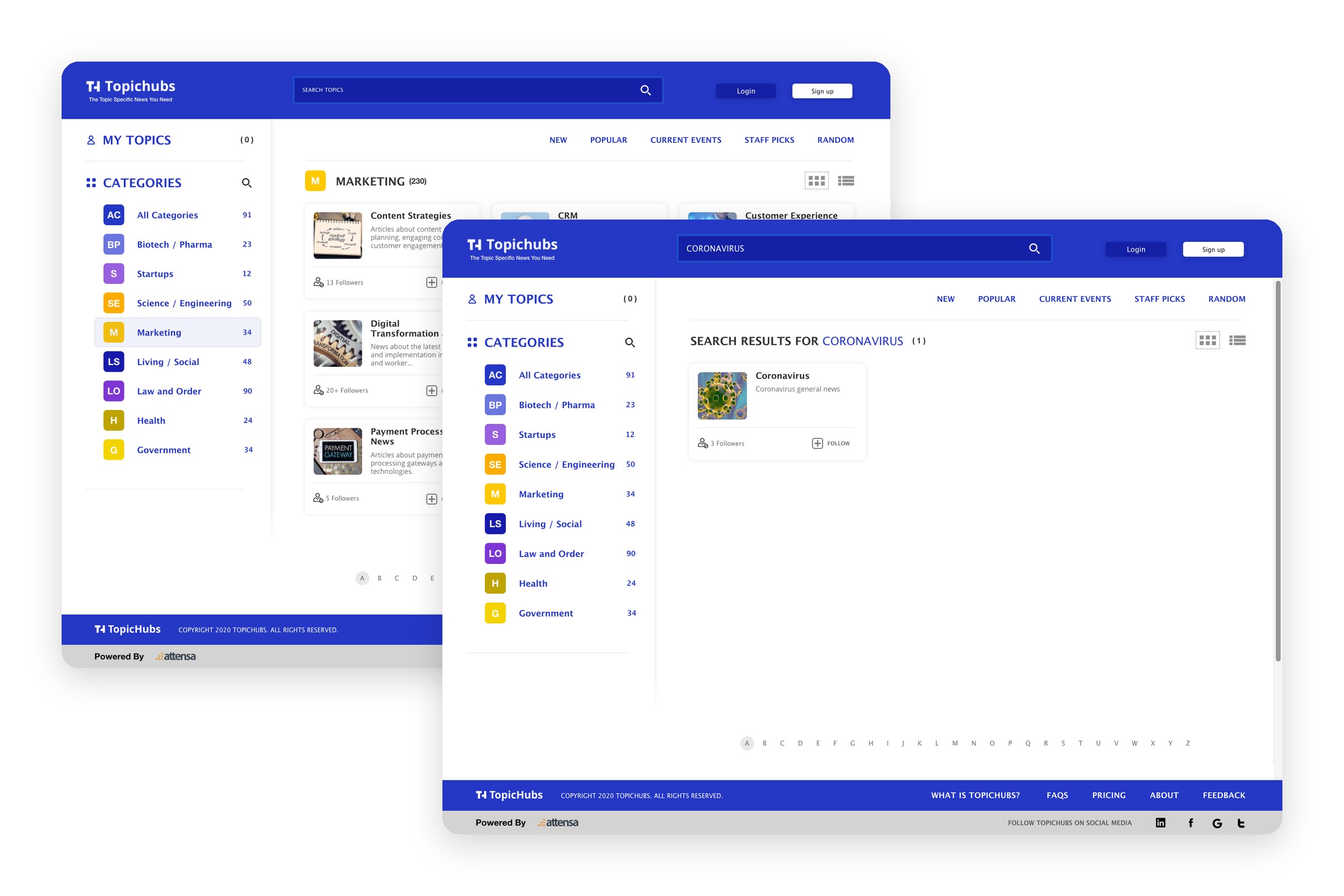
The initial work in January 2020 wasn’t tied to COVID-19. We designed the underlying TopicHubs experience in Adobe XD, including a homepage, individual topics, categories, article views and results pages, along with “my categories” for signed-in visitors and a popular-items section. The founder reviewed a clickable prototype through several rounds before development began.
That design work gave the team a starting structure when the first live hub suddenly had a time-sensitive subject.
Building the COVID-19 hub under pressure
On March 3, 2020, the founder began the COVID-19 hub initiative. We worked from an existing site, connected the third-party news aggregation API and implemented topic streams, category and story pages, mobile layouts and source presentation. The site ran on its own subdomain with SSL and included sharing, follows, a MailChimp subscription, a first-visit welcome and information about the project.
To move quickly, we established Jira tracking and continuous deployment so changes could be reviewed and released frequently. The Coronavirus Topic Hub went live on March 19, 16 days after the kickoff. The following days brought fixes to image handling, attribution and API error states based on live use.
An archived August 2020 view of the hub described more than 20 main coronavirus topics and more than 100 location-specific topics, with links to official information and data sources. The hub used reporting from verified news publishers and was free to access. That broader collection developed after the initial March release.
Building a foundation for more than one hub
The rapid first release solved an immediate publishing need but wasn’t the intended long-term foundation for multiple topic hubs. In April 2020 we rebuilt the site on a WordPress installation hosted on Google Cloud and connected the aggregation service through custom endpoints.
The second version added search, pagination and infinite scrolling; feed caching to avoid unnecessary API requests; routes for nested topics; and support for several domains using the same platform. Open Graph data supplied article headlines and images when stories were shared. An Airtable-backed lists page let the editorial team maintain selected resources without changing code.
We moved the updated system through staging and production, established redirects and analytics, applied security work and trained the founder on managing it.
A quick response that became a reusable platform
On March 19, 2020, TopicHubs had a live Coronavirus Topic Hub just 16 days after the project kickoff. It brought coverage from multiple verified sources into organized topics and regional streams at a time when information was changing quickly. By an archived August 2020 snapshot, the resource described more than 20 main coronavirus topics and 100 location-specific topics.
The initial release wasn’t the end of the project. In April we rebuilt the hub on WordPress and Google Cloud, adding search, caching and support for future topic sites. Across the January to July 2020 engagement, the story moved from designing a general news-discovery experience to responding to a specific need, then giving the product a more adaptable foundation for what came next.