Turning a mountain into a playable management game
Running a ski resort is a system of connected decisions. The shape of the mountain affects where runs can go; lifts determine how skiers reach those runs; buildings support visitors; and every change has a cost. Those relationships became the foundation for a proposed commercial ski resort management game.
An independent founder had the game concept, design document, gameplay rules and art direction. The goal was a playable prototype that let someone shape terrain, build and operate a resort, and watch simulated skiers move through the result. It wasn’t a request to publish a finished commercial game.
SLIDEFACTORY joined as the game design and development partner in September 2023. Working in Unity, we built the interactive terrain and placement systems first, then developed lifts, ski runs, skier behavior, larger mountain environments and the management mechanics that tied them together. By autumn 2024, the founder had a playable build with a tutorial, economy and real-terrain map.
Starting with the terrain
The first prototype tested the mechanic at the center of the game: giving players direct control over the mountain. We began with object placement and constrained terrain deformation, then developed brushes for raising, lowering, flattening, smoothing and sloping the ground. The tools used an adjustable cursor and prevented terrain changes beneath buildings, lifts and roads.
Roads and paths needed to follow those edits rather than sit above the landscape. Our early freehand approach produced uneven, zig-zag paths, so we changed it to spline nodes that define a smoother route and shape the ground around it. Later, we moved terrain edits to GPU shaders to improve the responsiveness and precision of buildings, roads and terrain brushes within one system.
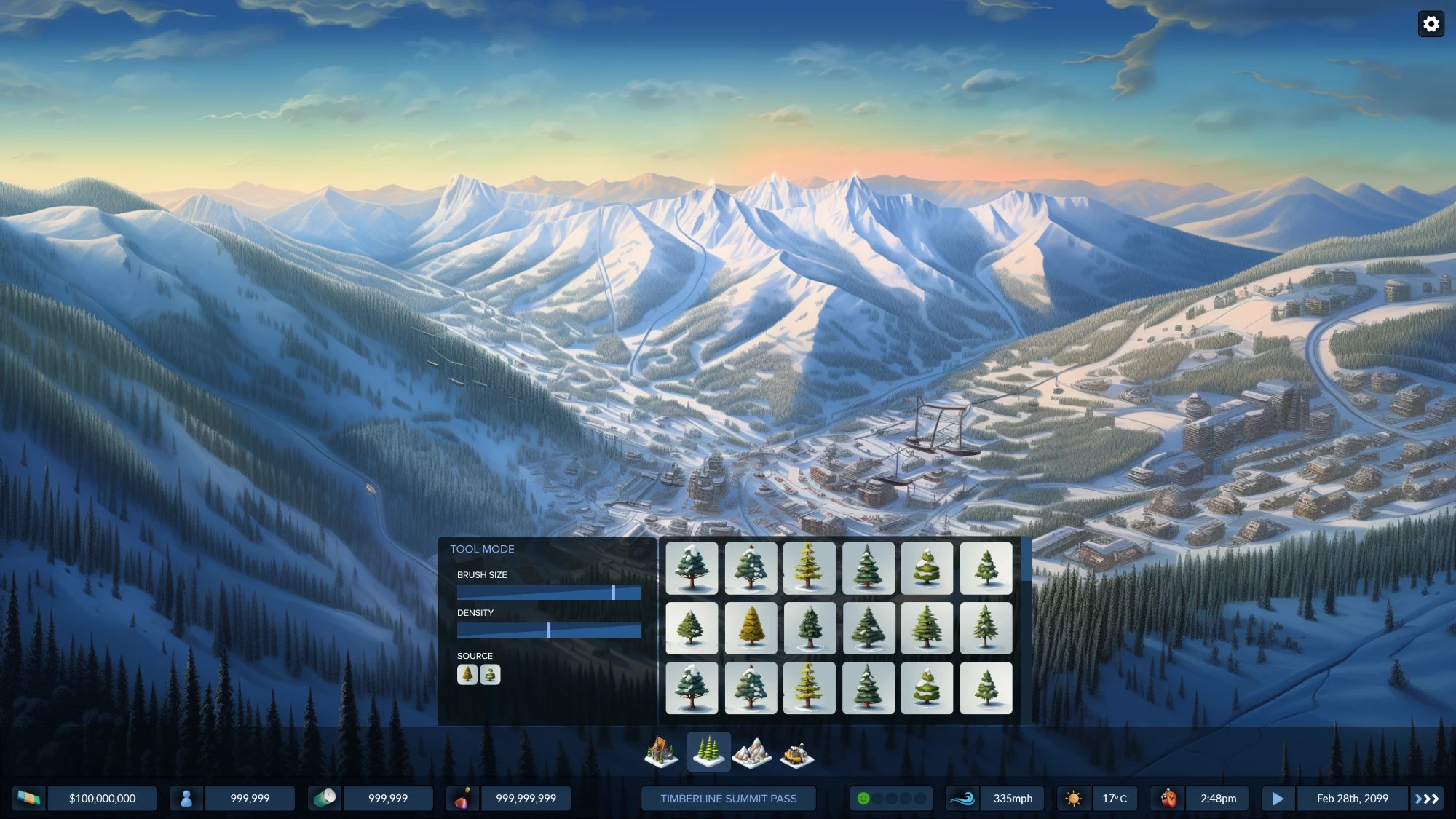
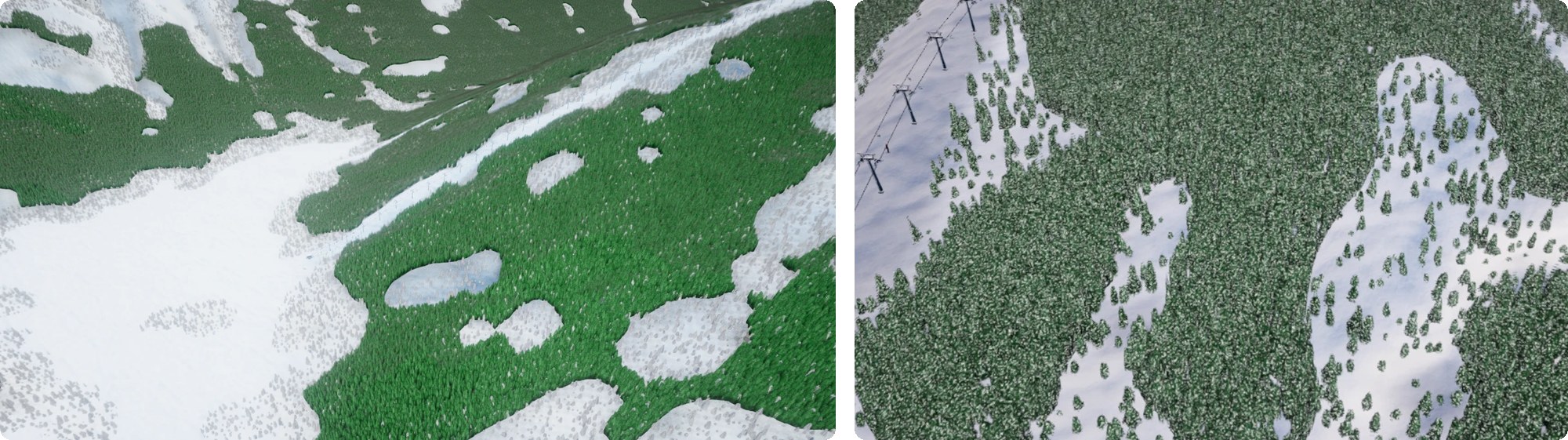
The same terrain workflow extended to vegetation. Players could paint trees by density and species, while placement limits accounted for elevation and slope. Trees cleared automatically where lifts and buildings were constructed.
Lifts, runs and skiers
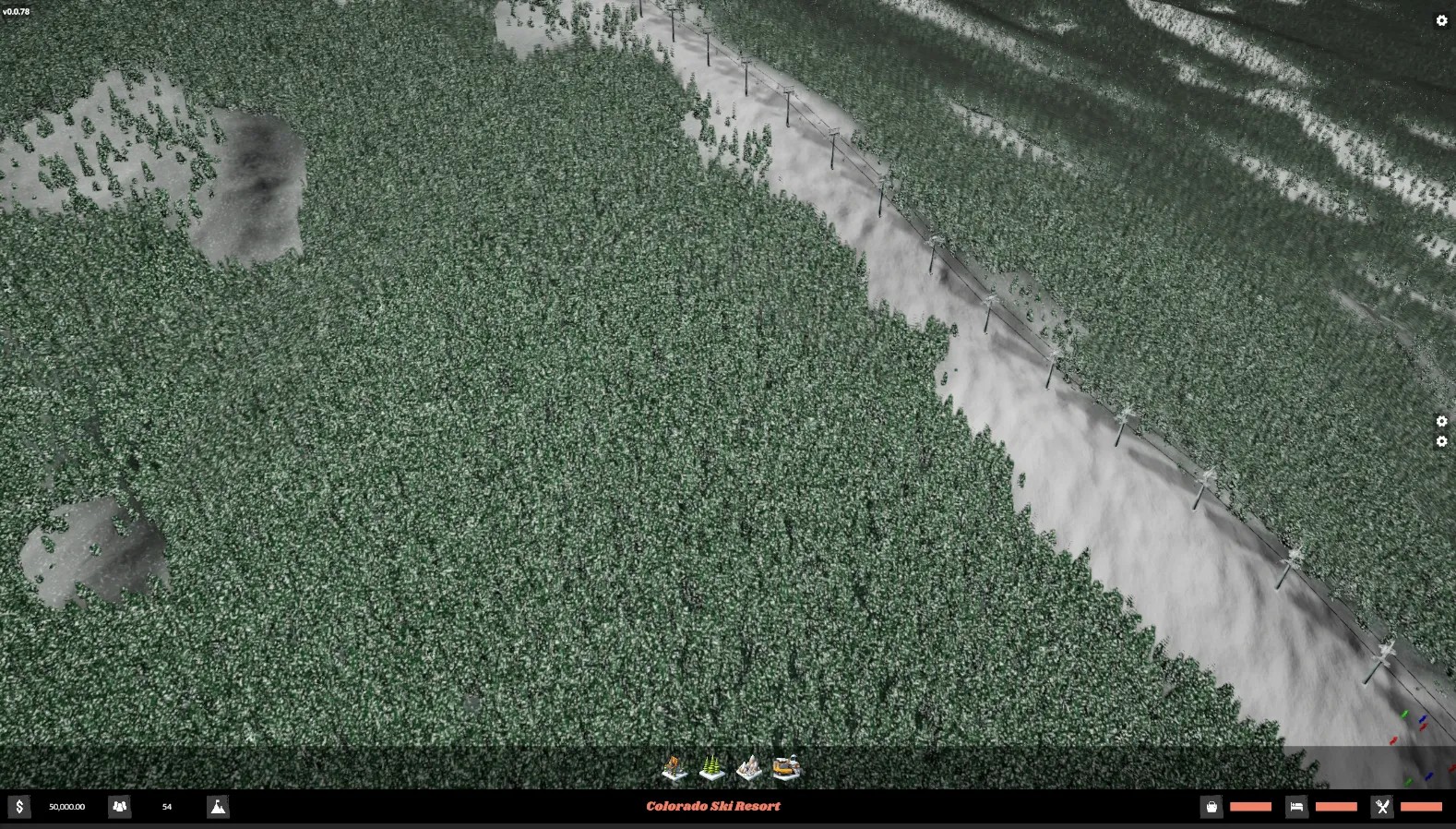
Once players could shape the mountain, the next task was to make their design usable. Lift placement evolved through several iterations into a two-click interaction for lower and upper stations. The game positions towers between the stations, removes trees beneath the cable, checks collisions and shows the price before the player confirms it. Ski runs are painted onto the terrain, stored as images and checked for continuous connections to lift start and end areas.
Those paths only mattered if simulated visitors could use them. We developed skier behavior for moving from a parking area to a lift, riding uphill, selecting a suitable run and skiing back down. The team called these visitors “skeeple.” We tested Unity NavMesh, flow maps and the A* Pathfinding Project, then tuned movement to follow slope, accelerate downhill and avoid uphill routes, trees and buildings. Skiers could also crash and recover.
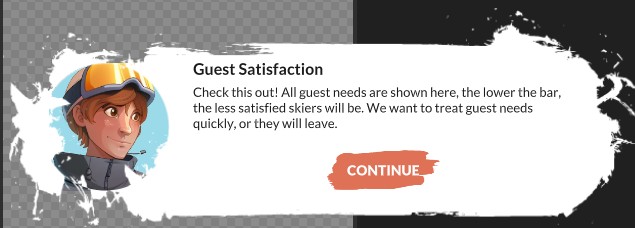
As the prototype developed, their behavior gained reasons to visit the rest of the resort: food, rest and warmth needs that could be met by different buildings. Those needs later informed the quest system.
Making a real mountain fit in memory
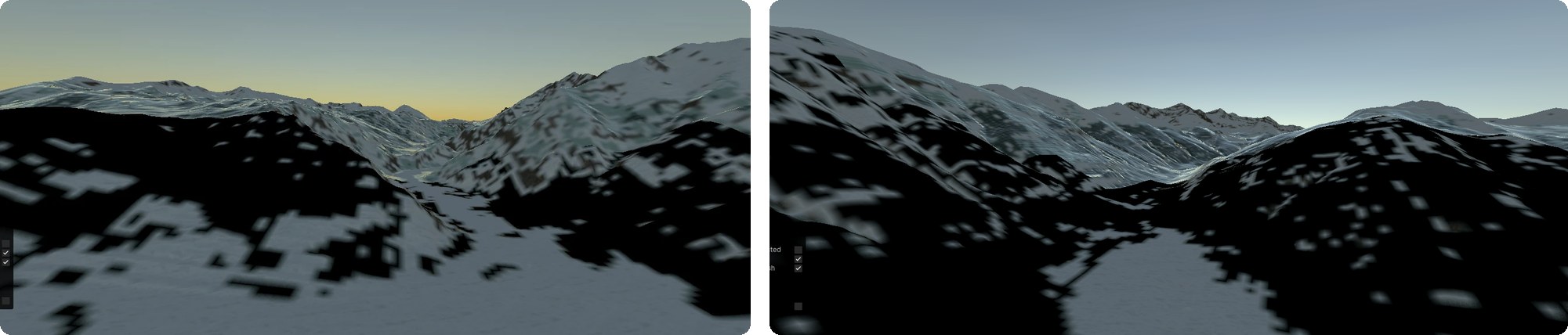
A large ski mountain introduced another constraint: the game couldn’t keep the entire landscape, its trees and every visitor loaded at full detail. We built terrain streaming that loads tiles near the camera and unloads distant ones while preserving objects and skiers as they cross tile boundaries. From build 0.0.41, load time no longer scaled with the full map area in the same way.
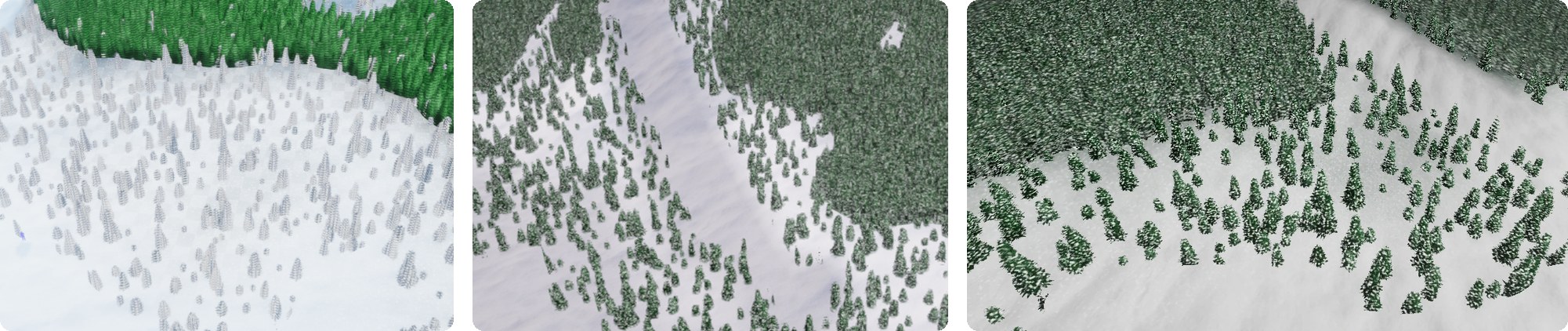
Forests needed their own optimization. We developed a GPU-based texture forest and used Unity’s multithreaded job system for mesh generation. With that foundation, we imported heightmap and terrain data for a real Colorado mountain, automatically divided it into tiles and applied snow, cliff and forest textures based on slope.
Connecting the simulation to gameplay
By spring 2024 the terrain and simulation tools were substantial enough to connect through game rules. We added costs for terrain work, tree removal, runs, lifts and buildings, with lift prices reflecting length and tower count. Players saw a cost preview before placing an object, and the game prevented actions that exceeded available funds.
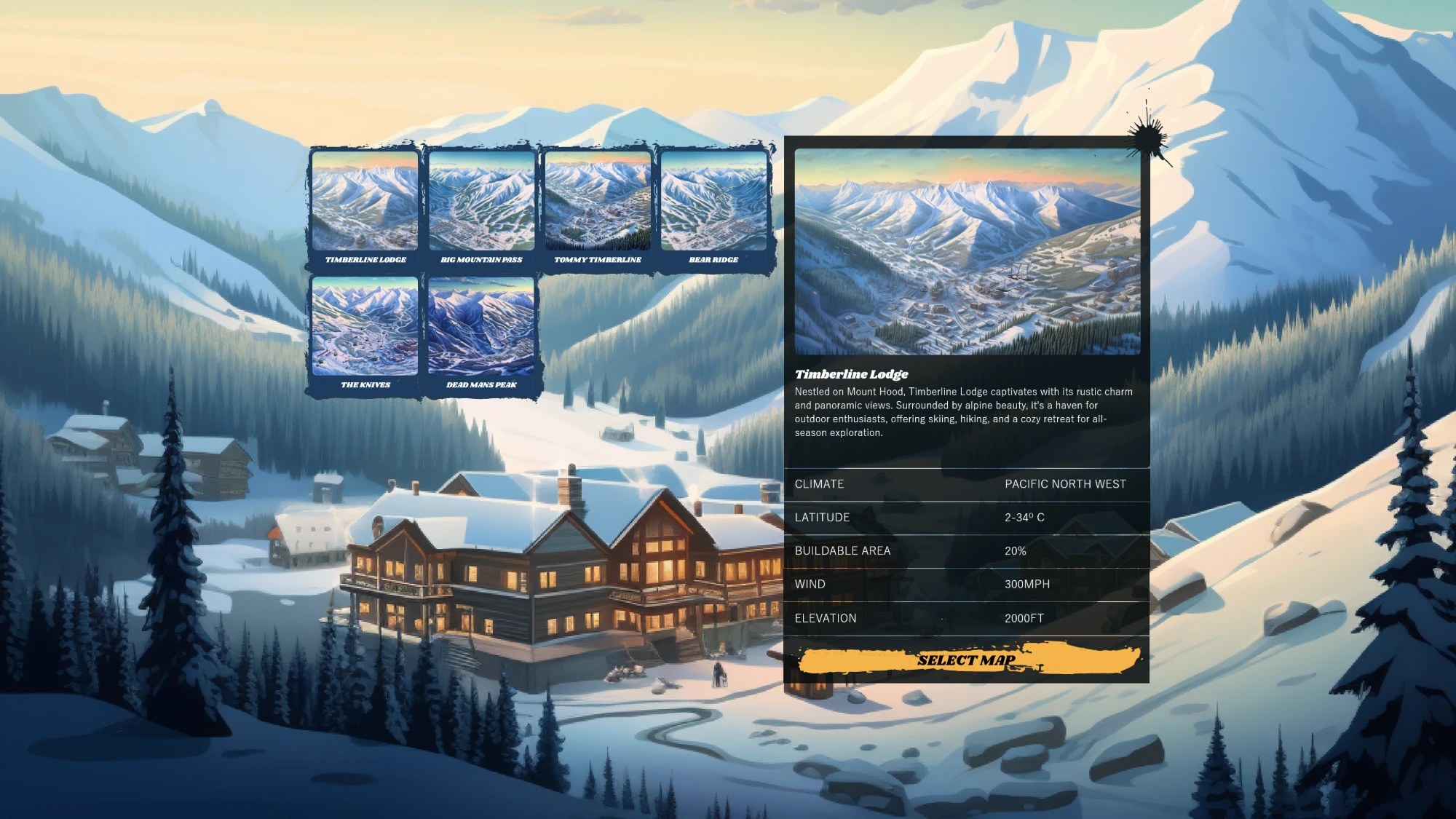
We linked skier needs to buildings and quests, creating objectives around the areas of greatest need and rewards related to building values. To give someone a way into those systems, we built a step-by-step tutorial with a gradually expanding play area, highlighted controls and tasks that progress from a first building to a functioning lift.
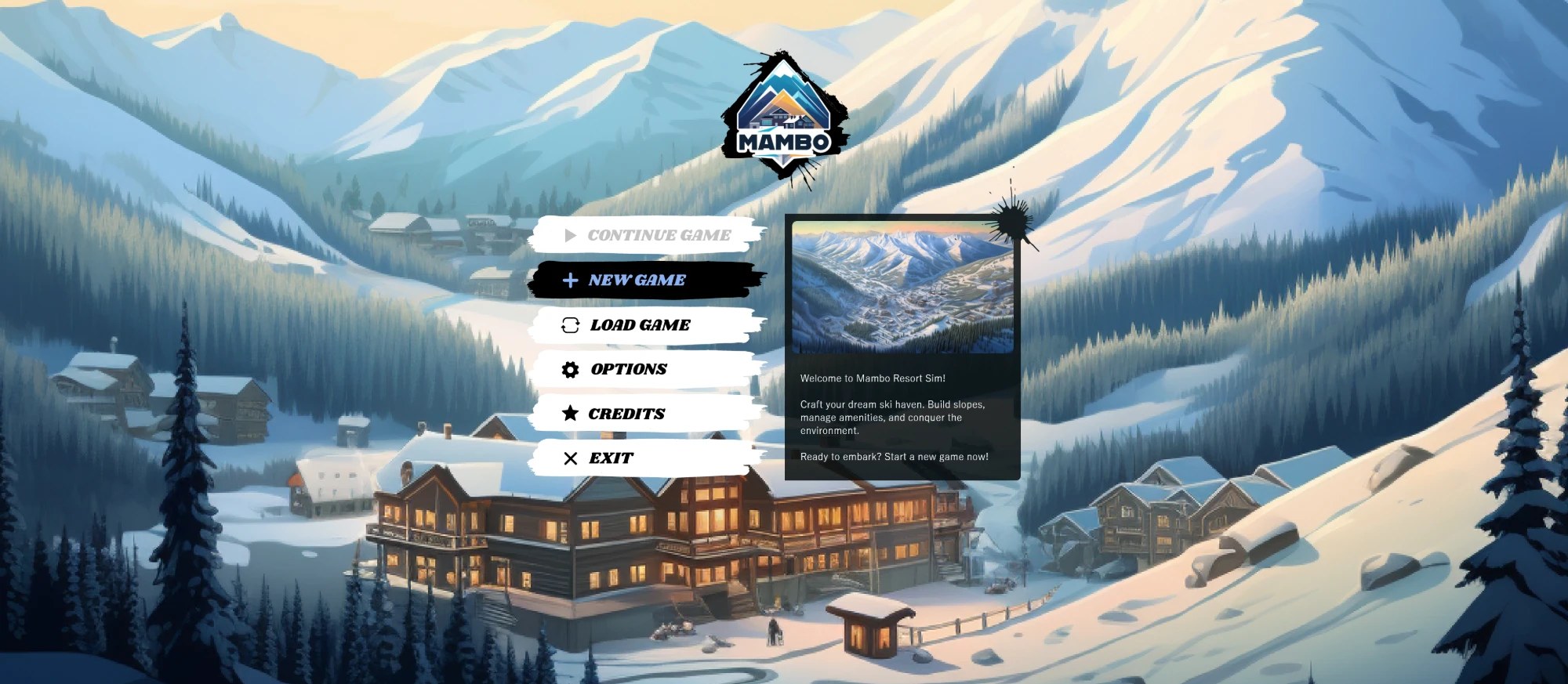
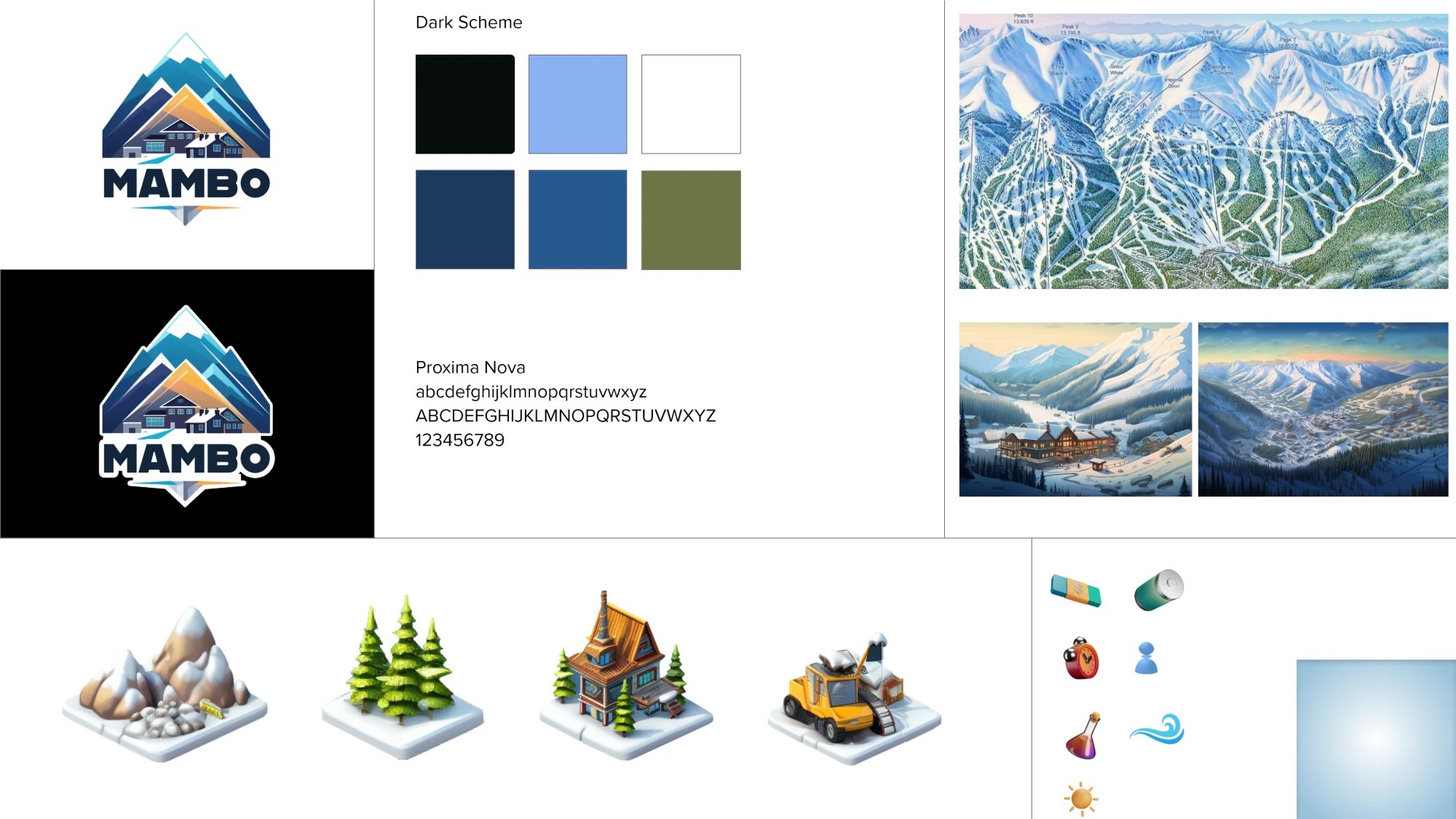
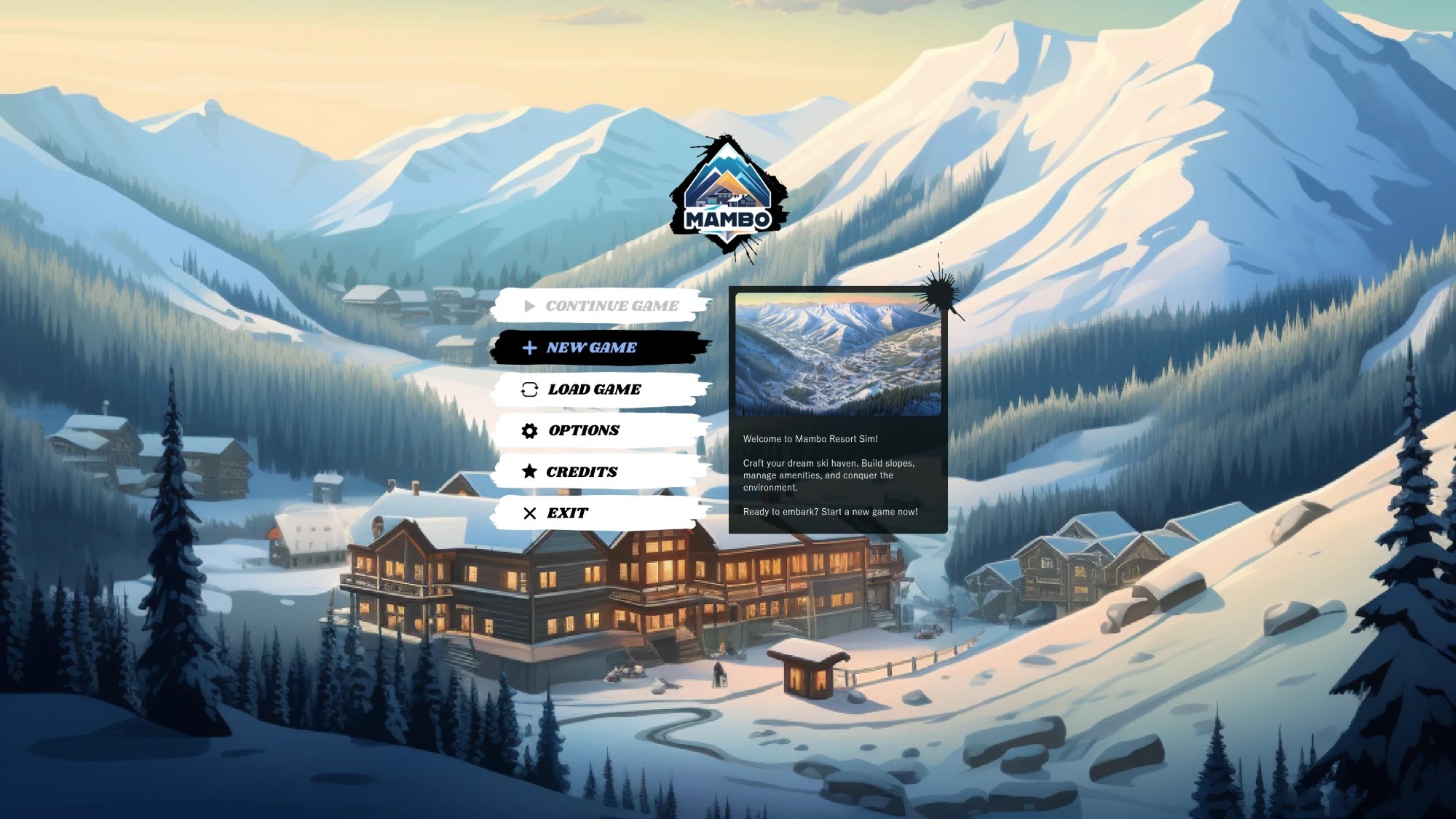
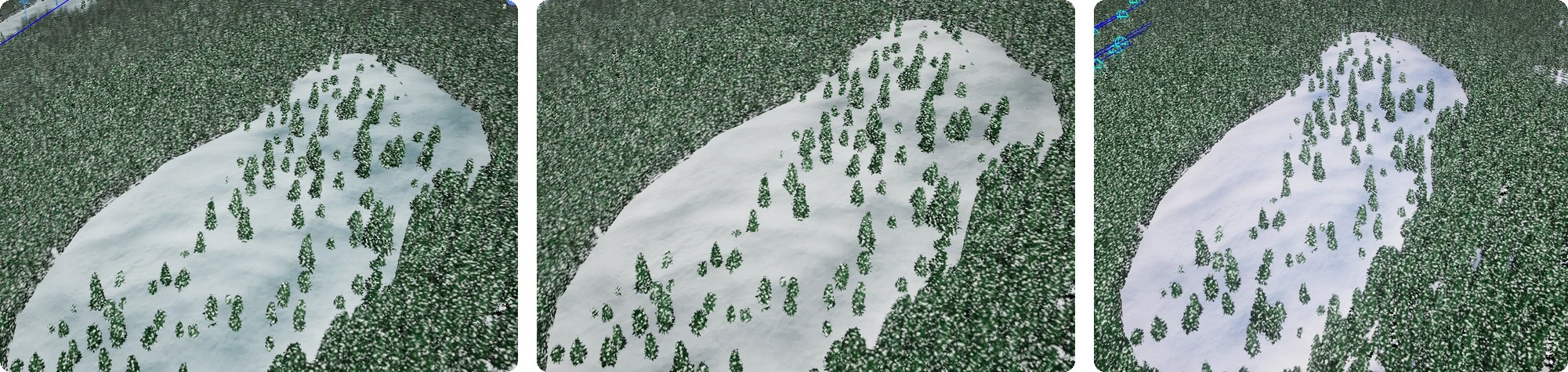
We implemented the founder’s interface designs in Unity UI Toolkit, including tooltips, floating panels, meters, a quest log, save and load, and audio settings. Visual development also included a move to the Universal Render Pipeline, a painterly Kuwahara filter for trees and lighting work on the color of snow shadows. Gameplay values were documented in the Unity editor so the founder could continue balancing the simulation.
Refining the prototype through playable builds
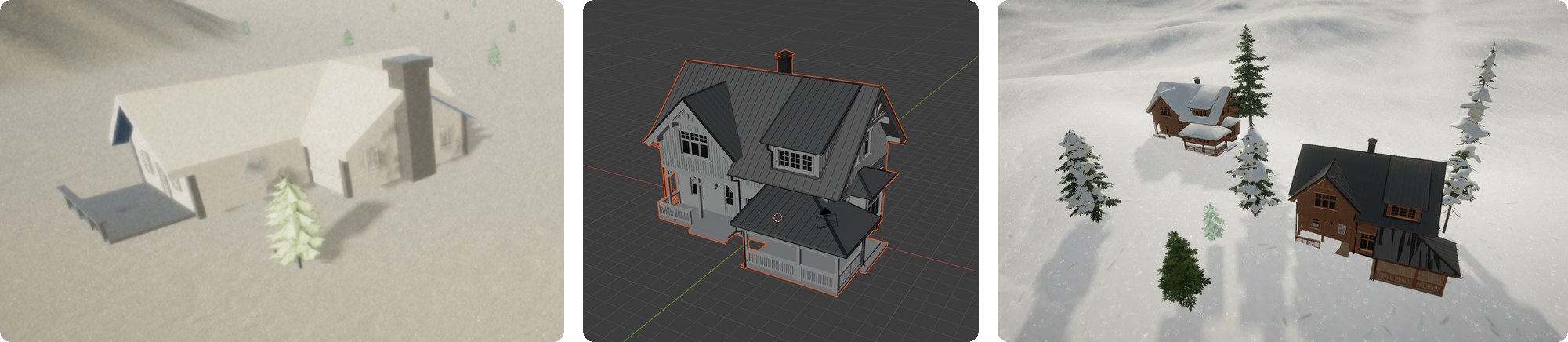
The founder tested the simulation as it developed, rather than waiting for one final handoff. The team worked in Jira sprints and supplied playable builds for the founder to evaluate, with feedback translated into new tickets and estimates. The build history passed version 0.0.75, representing at least 75 review builds over the engagement.
When the game design document expanded, we estimated the additional scope against the playable-prototype goal so the founder could determine what to include in that stage. The work ran from September 2023 into October 2024.
A mountain the founder could build and play on
The finished prototype gave the founder more than a collection of construction tools. Players could shape a mountain, place lifts and runs, watch skiers navigate the resort and manage a basic economy through quests and buildings. The tutorial connected those systems into a playable first experience, while the streaming technology allowed the simulation to use terrain based on a real Colorado mountain.
From September 2023 to October 2024, we delivered more than 75 review builds across roughly 1,600 recorded development and production hours. The founder supplied the overall game vision and art direction, and each playable iteration informed the next. The work ended with a playable prototype of the planned commercial game, giving the founder a mountain, a simulation and the tools to keep refining how the resort plays.