Making digital creation possible from a phone
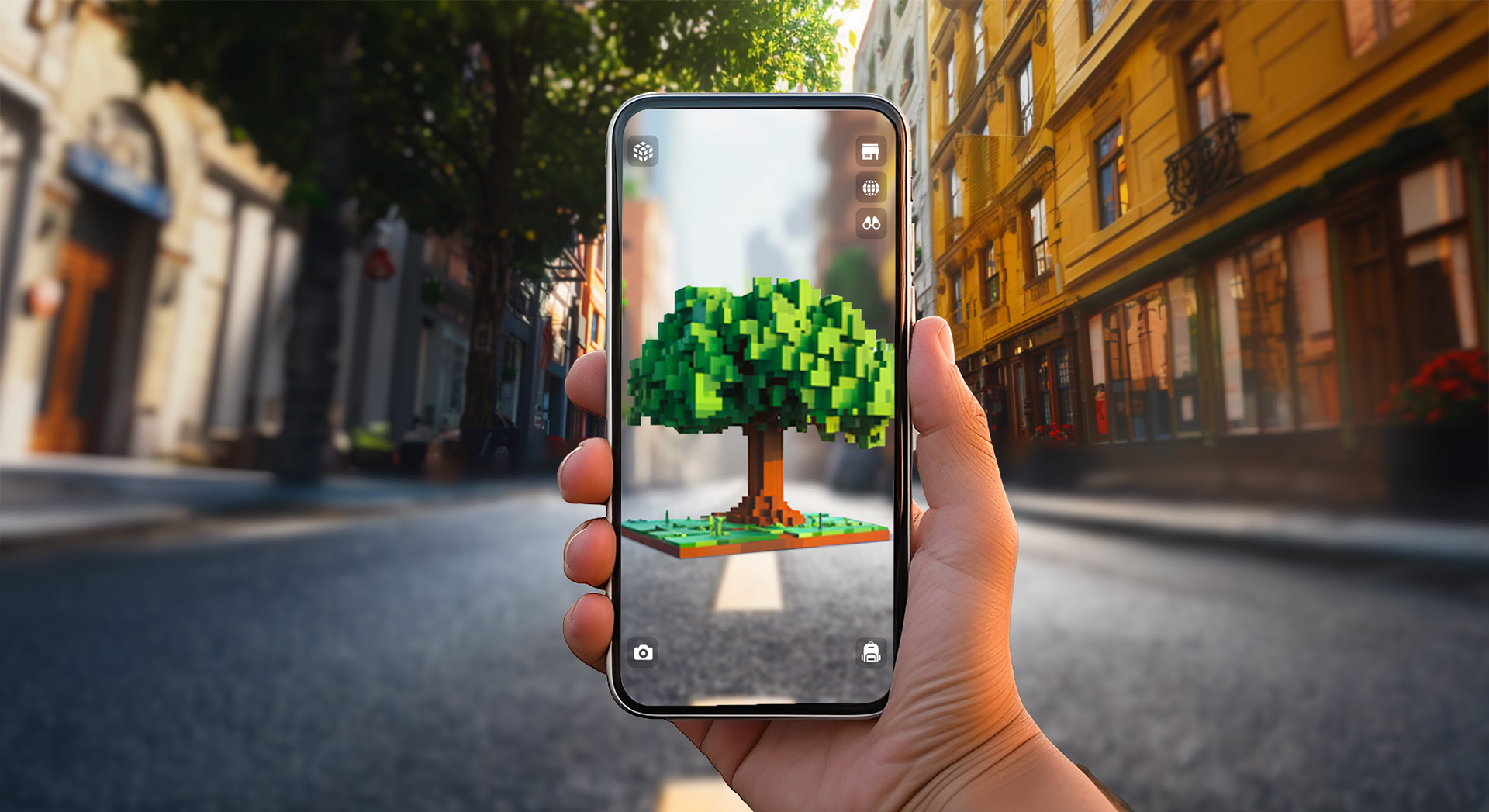
Creating detailed 3D work has often meant using a desktop interface with a mouse, keyboard and specialized software. Arkh had a different idea: give people a way to build voxel art directly on a phone, then place, share and exchange those creations in the real world through augmented reality.
That ambition combined several experiences inside one app. The editing tools had to work with touch gestures on a small screen. AR placement needed to make a creation feel anchored in physical space. Social features and a marketplace had to connect creators with the rest of the community. Separate teams were developing parts of the backend and spatial technology at the same time.
In 2021, Arkh raised about $5.7 million and acquired intellectual property from an earlier AR platform. Those developments belonged to the company as a whole, while multiple teams worked on different parts of the app.
Starting in July 2020, SLIDEFACTORY worked remotely alongside Arkh’s own team and partner agencies on the Unity editor, AR interactions, app features and middleware. Over the next two years, the project moved through private testing, launch preparation and further development for iOS and Android.
A creation tool built for fingers
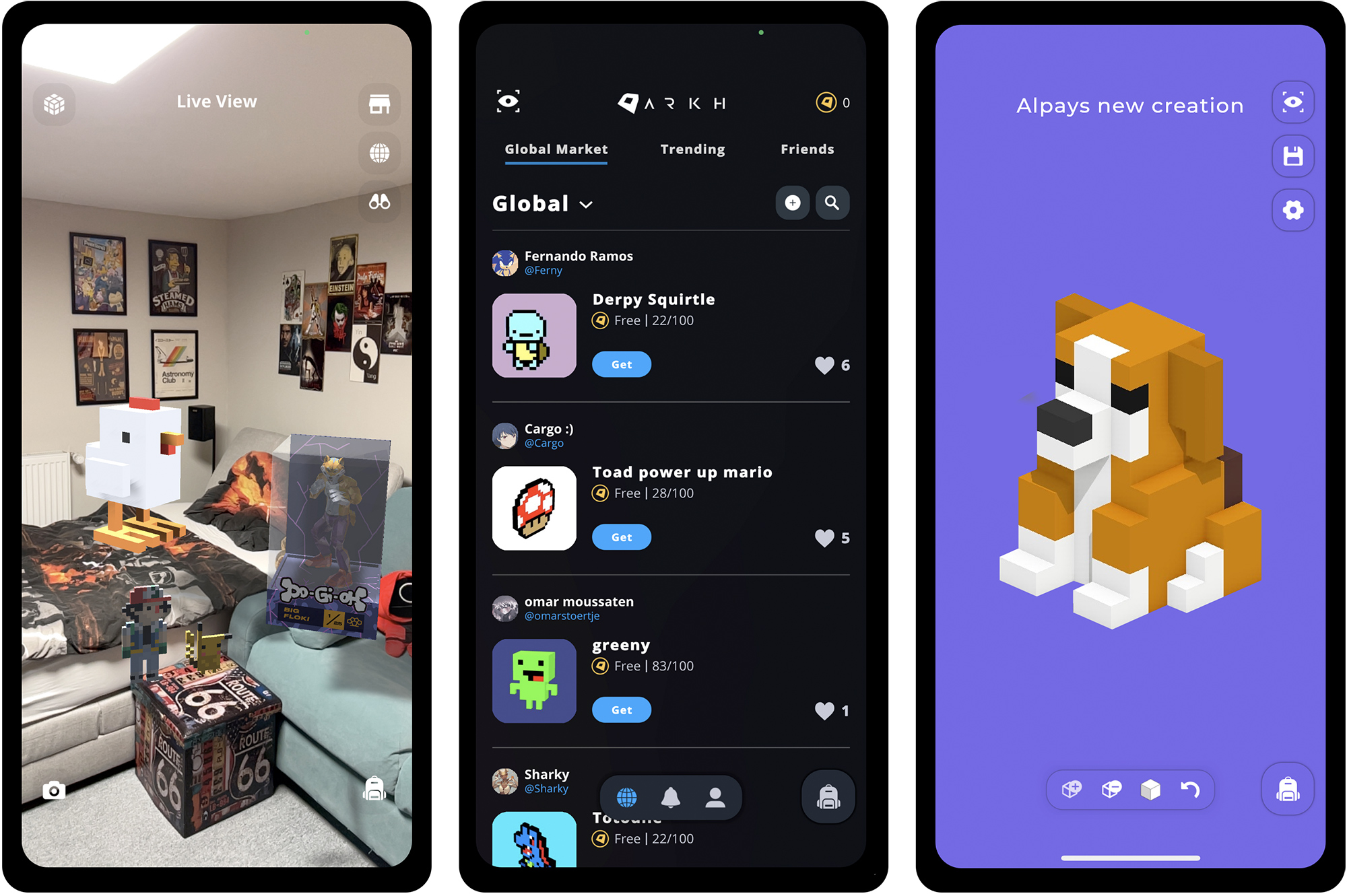
The editor was the starting point because every later feature depended on people being able to create content on a phone. We developed a voxel engine in Unity with controls designed for touch: tapping to place cubes, long-press painting, pinching to zoom, two-finger rotation, a double-tap reset and an optional gyroscope view.
The toolset expanded to layers, symmetry, line and shape tools, a color picker and full undo. When the product direction changed in early 2021, we rebuilt the editor flow rather than preserving the original sequence of steps. We also added small interaction details, including opening animations, voxel-deletion effects and automatically generated thumbnails. On older devices, we replaced a lagging voxel drawer with an optimized scrolling component.
Placing creations in the real world
With a creation completed, the app needed a way to position it in a real setting. We built the AR placement interface in Unity, including touch controls for translation, rotation and scale and a live view that anchored the result in physical space. Later additions covered linked content on objects, global spaces using spatial anchors and an overhead view.
Performance work ran alongside those interactions. When testers reported phones getting hot, we changed the app to end an AR session when there was no creation in view, reducing unnecessary processing without changing what users saw when an object was present.
Helping creators find and exchange work
Once users could build and place creations, they also needed ways to discover other artists and share what they had made. By spring 2021, our work had expanded to that part of the app. We developed global, trending, friends, discovery, activity, featured and rare-item feeds, with pagination or infinite scrolling, pull to refresh and Elasticsearch-backed search. Profiles supported editing, links, following, likes and activity.
For collectors and creators, we implemented an inventory or “backpack” for saved creations, iOS and Android in-app purchases, an in-app currency, limited items and redeemable rewards. The work also included minting digital collectibles and connecting MetaMask wallets. Deep links made shared creations open in the app, and OneSignal handled push notifications.
These mobile features had to communicate with backend services built by other teams. Our middleware work validated creations before saving, checked app versions, reduced unnecessary user data in API responses and moved functions into Docker containers. Real-time feed updates using WebSockets began in 2022. We were responsible for the Unity experience, substantial parts of the mobile social and commerce layer, and connecting middleware, not for building the entire backend platform.
Preparing the app for wider use
Arkh moved through a private beta in 2021 and toward a broader release during spring 2022. Each stage required device testing and focused fixes, from memory leaks and an Android freeze in the backpack to purchase and rewards flows that needed testing for misuse.
We also worked through Android signing, Gradle configuration, Google Play assets and iOS entitlements and build settings. From April 2022, a project manager coordinated incoming QA, prioritized issues with the client and directed the final rounds of launch work. The engagement continued through August 2022.
Creating, placing and sharing from one app
Arkh’s concept depended on bringing several activities together: making a 3D creation on a phone, seeing it in the real world and sharing or collecting it with other people. By the end of our involvement, those experiences had taken shape through the touch-based voxel editor, AR placement tools, social feeds, commerce features and the middleware connecting them to services built by other teams.
We contributed about 2,600 hours between July 2020 and August 2022, working with Arkh and its partner agencies through private beta, release preparation and subsequent refinements. It was a multi-team product, and our part was the Unity experience and substantial portions of the connected mobile functionality. The case illustrates how an ambitious creator platform became a working mobile experience across iOS and Android.